
Asleep for nearly thirty years, woken in 2018.
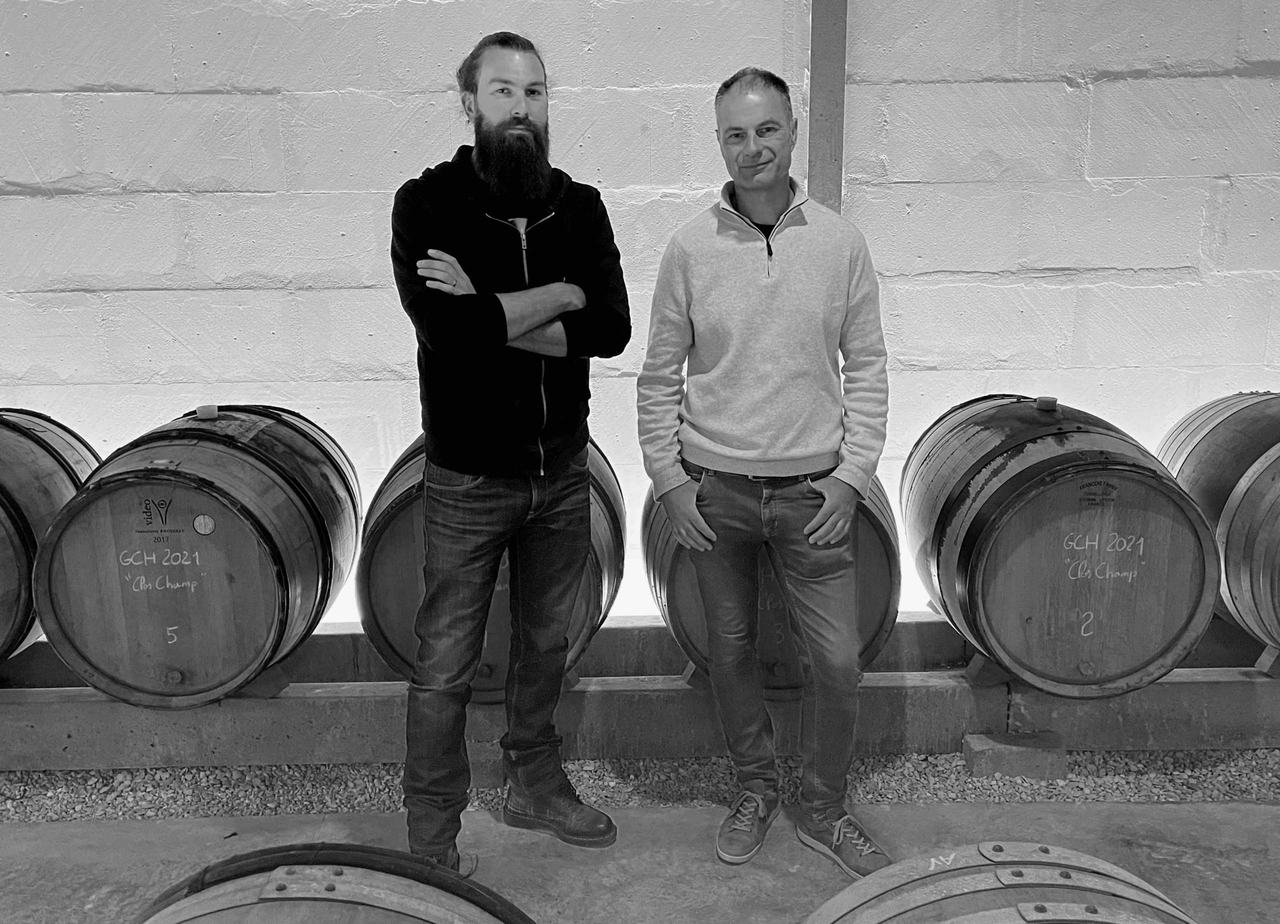
Michaël Le Guellec's family had owned vines in Gevrey since 1920; when his grandfather retired in 1990 the whole thing simply went to sleep for nearly thirty years. In 2018 he and his friend Arnaud Ducouet, who walked out of a bank to do this, woke it up. Three and a half hectares, including Clos Champ, the only walled vineyard in its lieu-dit, planted in 1930, and Les Jeunes Rois from 1965. A few thousand bottles a vintage, made under Pierre Millemann's eye. New domaines in Gevrey are usually a marketing exercise. This one is a resurrection, and the wines are already causing trouble.
02 · Two men and a furrow“We left our former lives to plough a different one.”
The vines came into the Le Guellec family in 1920, the Clos Champ was planted ten years later around the family house in Brochon, and Michaël’s grandfather made wine from them until he retired in 1990. After that the parcels were leased out and the wine went to the négoce; the old cellar under the house fell quiet. Michaël studied plant science and built a life in Lyon with his wife and two children. Arnaud Ducouet was a bank adviser, “passionate about his clients,” Michaël says, and the two became friends over the years. Somewhere in that friendship a decision was made, and in 2018 they took the vines back together, trained for the trade side by side, and built a brand-new single-storey cuverie on the chemin de Saule: “no grand underground cellar, but a winery dedicated to working the grapes and tasting with our customers.” The first vintage was 2019; it went into the Guide Hachette with two stars and a coup de cœur: “une entrée en fanfare.”
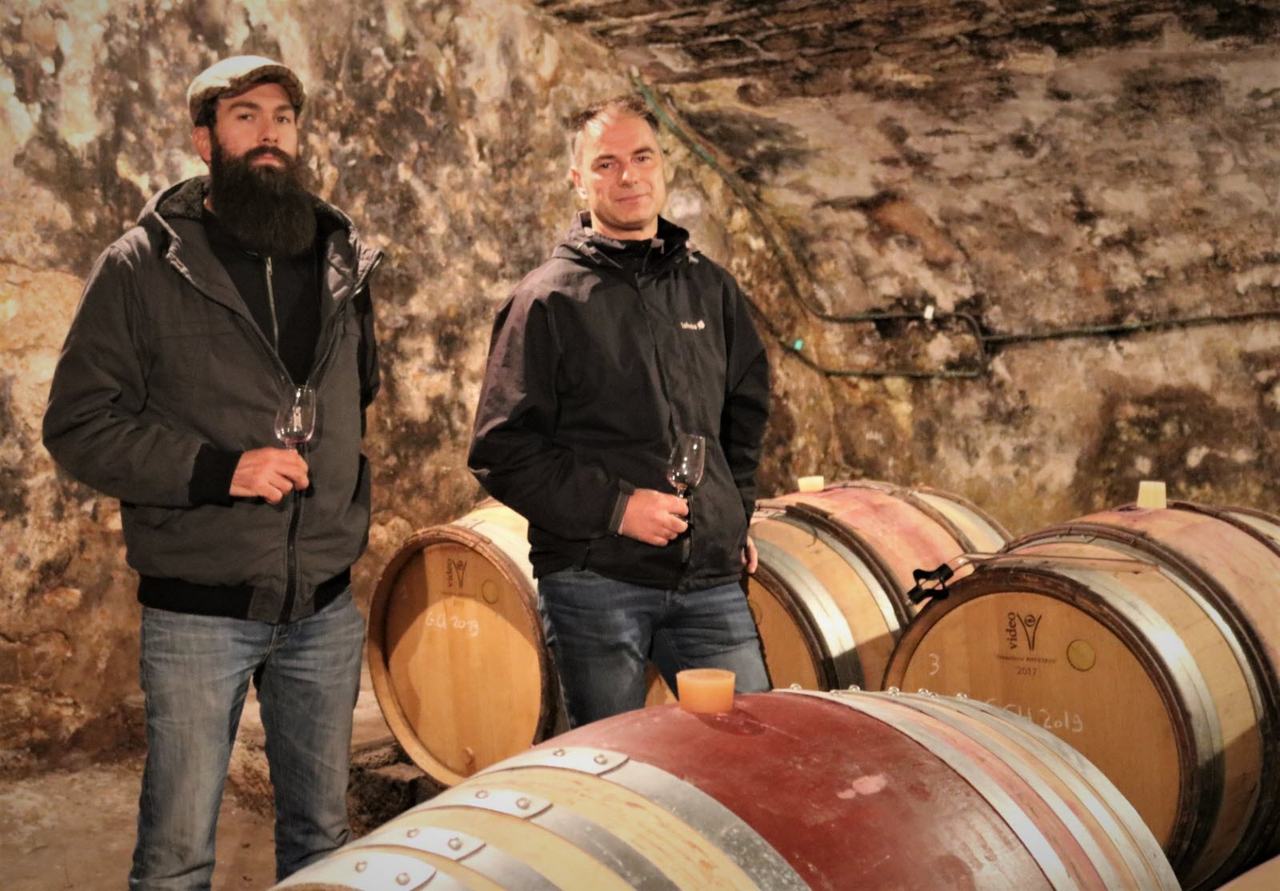
Their own words are the best account of it. Michaël on Arnaud: “he proved to me that one can — one must! — follow one’s dreams and build a life around one’s values.” Arnaud on Michaël: “like a little brother to me. The one who opened my eyes to my own wish to return to the land. He listens to the elders and looks to the future with confidence. A builder full of ideas and a relentless worker.” And both: “We left our former lives to plough a different furrow, to work with living things, follow the rhythm of the seasons, and make a wine that resembles us: true, good, and as respectful of nature as possible.” Pierre Millemann, the consulting oenologist whose own single barrels of Chambertin and Corton-Charlemagne have made his name, oversees the winemaking; he was the one who told the trade about them. Harvest is still done by friends and family.
Nous avons quitté nos vies d’avant pour tracer un autre sillon.
Michaël Le Guellec and Arnaud Ducouet
03 · The northern endClos Champ, walled and ninety years old, where the grands crus road runs out.
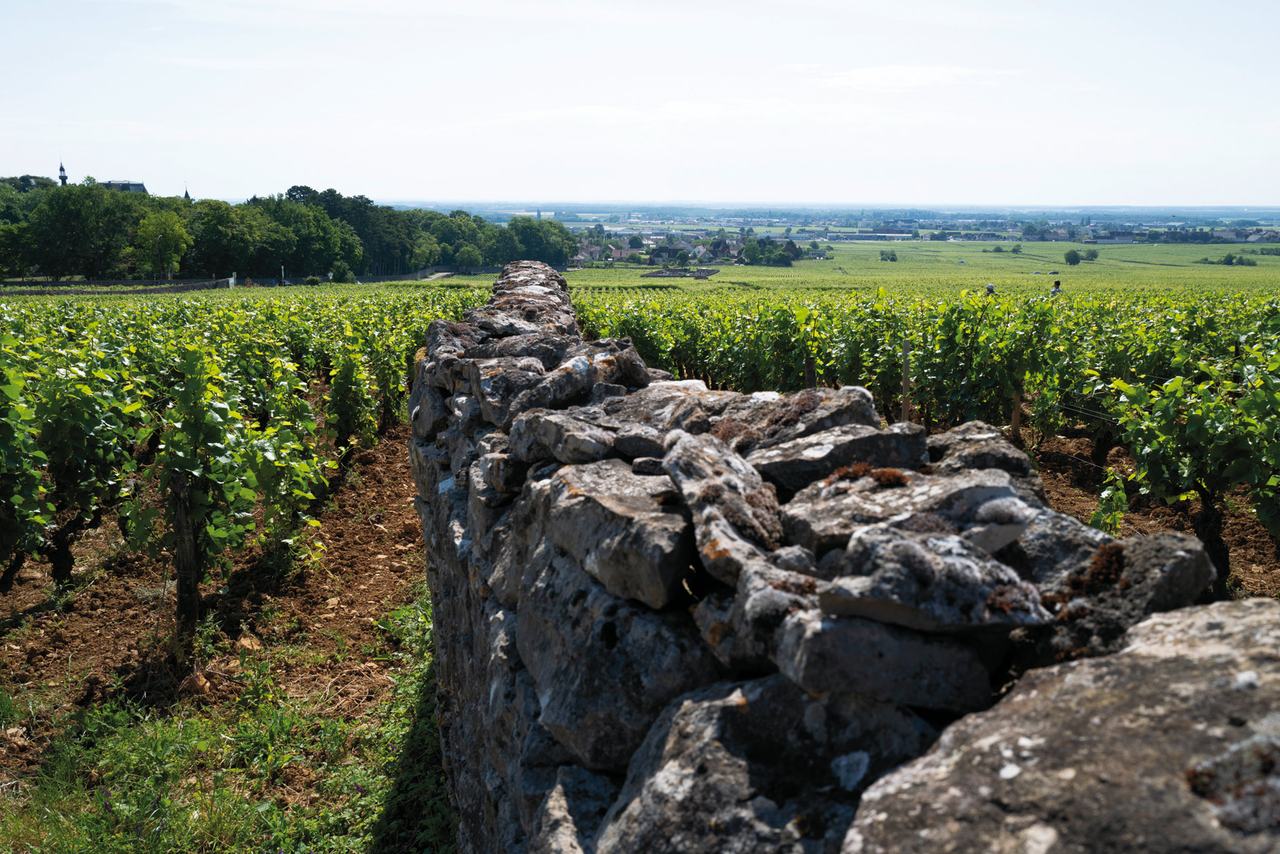
Brochon is the commune where the Route des Grands Crus leaves Gevrey going north, and its slope still carries the Gevrey-Chambertin appellation. The soils face east: limestone, with marl and loam washed down from the plateau above. The Clos Champ is eighty ares of 1930 Pinot Noir on the mid-slope, enclosed by its wall, the only walled vineyard in the Champ lieu-dit and a monopole of the family; the grandfather’s house stands inside it. Les Jeunes Rois is thirty-four ares planted 1965 “just ahead” of the house, clay-limestone, sixty-year vines. Cuvée 93, new in 2023, comes from the unwalled part of the same Champ lieu-dit, vines of the same 1930 generation: ninety-three years old the year it was first made, which is the name. A tenth of a hectare in Queue de Hareng goes into the Côte de Nuits-Villages, which becomes a Fixin from the tiny 2024 vintage. Other family parcels are being reworked and will come into the range “when they are considered worthy.” The two whites (a Pernand-Vergelesses Les Belles Filles, first made in 2023, and a Savigny blanc) are from bought grapes, and say so.
04 · Accompanying, not alteringNative yeasts, pump-overs, fifteen months, no fining, no filtration.
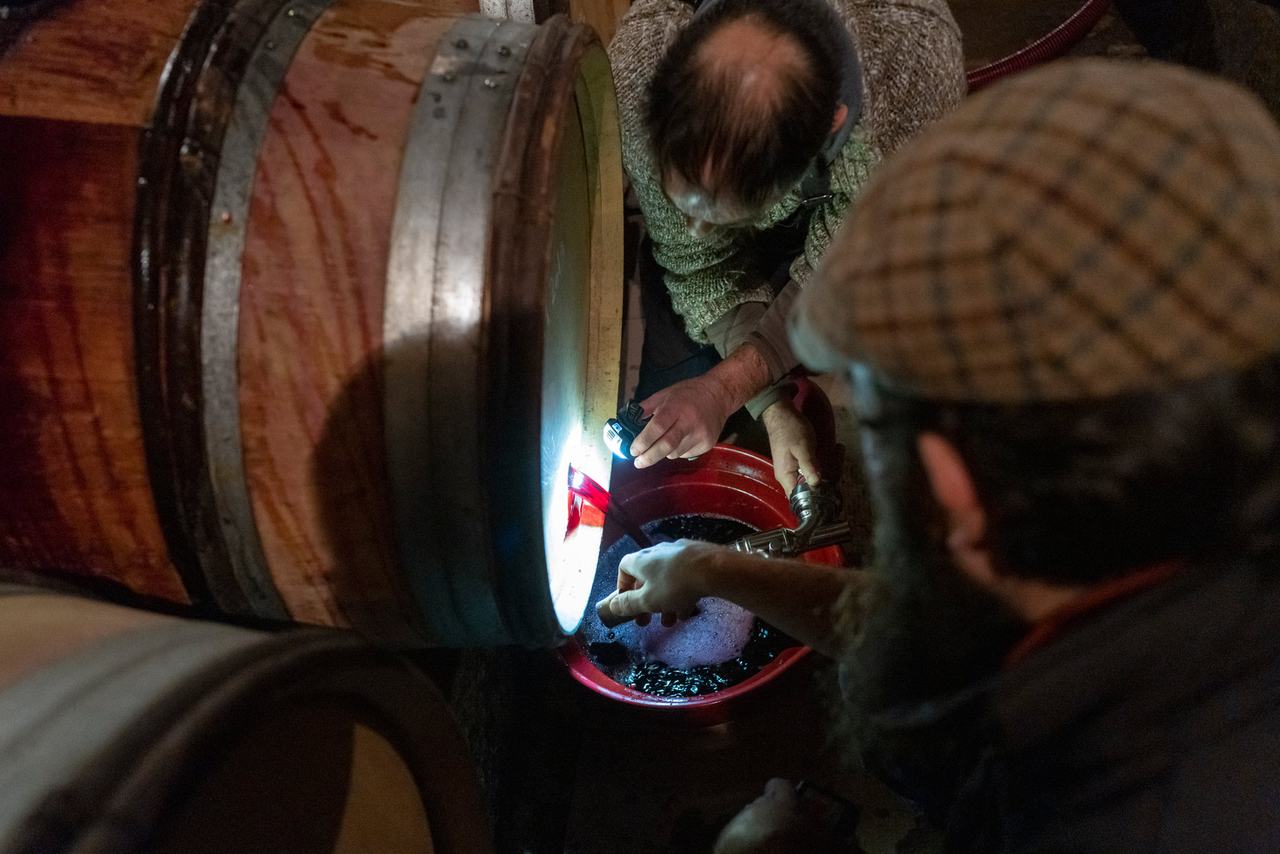
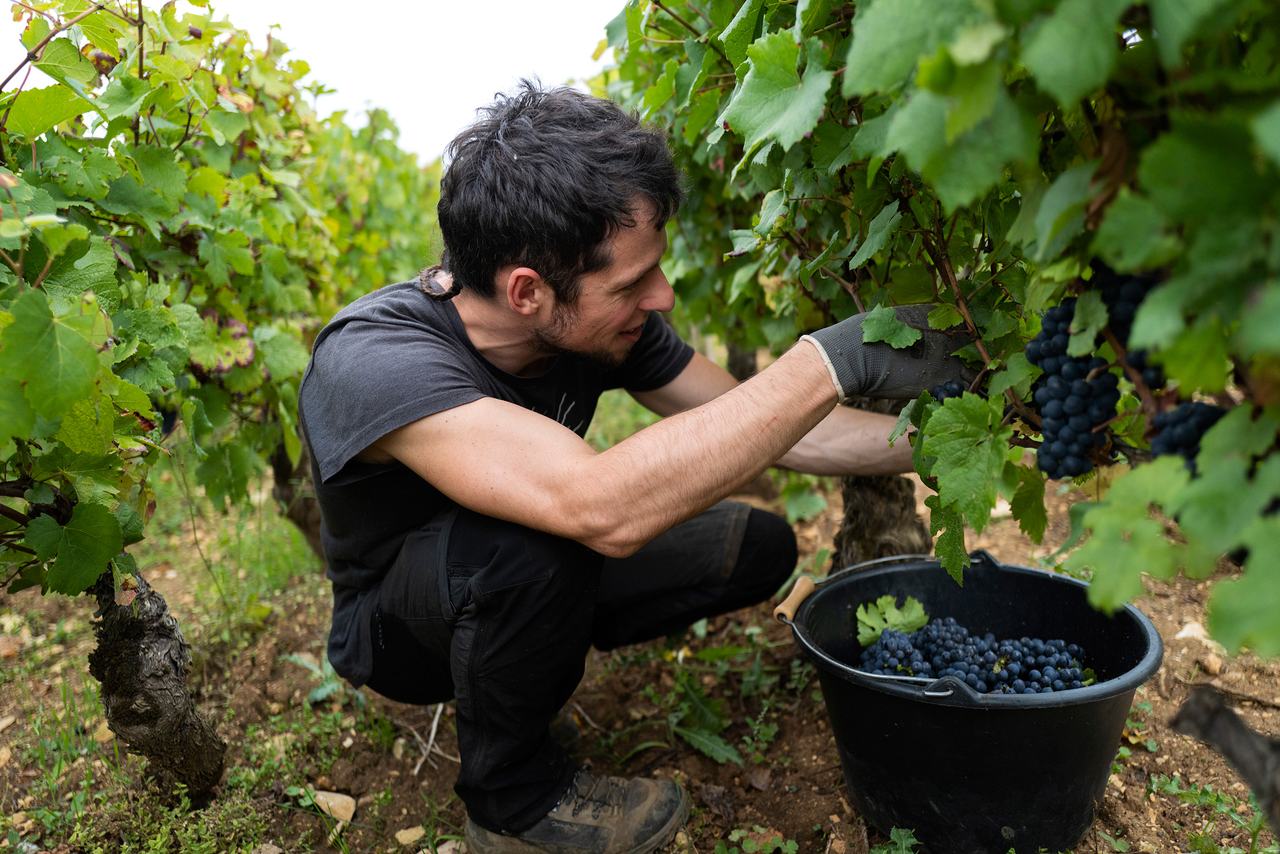
HVE-certified, no herbicide, and only products the organic rulebook allows, though they have not sought the certificate: “before everything, in the service of the soil and the plant.” Hand harvest. A cold soak in steel, fermentation on the indigenous yeasts, more pumping over than punching down, and a cautious hand with stems: thirty per cent whole bunches in 2020 and 2022, none in 2023, decided by the year. Fifteen months in barrel, about thirty per cent new, with the coopers chosen cuvée by cuvée after trials: Rousseau for the Clos Champ, François Frères for the Jeunes Rois (which, Michaël found, “couldn’t take the Rousseau barrels”), Cadus and Ermitage for the 93. Two months in tank, then bottled without fining or filtration. The house phrase for it: a vinification peu interventionniste, “accompanying the cuvées rather than trying to alter them.” The domaine’s own ambition is modest and exact: wines “typical of Gevrey-Chambertin and the Brochon slope, of finesse, structured and powerful.”
En accompagnant les cuvées plutôt qu’en cherchant à les modifier.
Domaine Le Guellec-Ducouet
05 · What they say“Destined to become one of the must-haves of Gevrey-Chambertin.”
The Guide Hachette, on the first vintage: “A fanfare entry into the Guide for this young domaine with this admirable Gevrey… black fruit, spice, vanilla, liquorice, violet… supple, velvety tannins supporting a fleshy matter that a good liveliness drives.” On the 2022 Clos Champ, two stars: “elegant and rich at once, built on refined, silky tannins, with a long finish that draws the profile of a wine typed and promising.” On the 2023: “ninety-year-old vines still well able, given the breadth, depth and balance this wine offers. For long keeping, assuredly.” Neal Martin in Vinous, 91–93 for each of the three 2023 Gevreys: the Clos Champ “another impressive wine from this lesser-known Gevrey producer,” the Jeunes Rois “well crafted and recommended,” the 93 “vibrant and fresh with crisp tannins… this is very fine.” Greg Sherwood MW: “a grower destined to become one of the must-haves of Gevrey-Chambertin… and an absolute steal, for now,” with 94 for the 2022 Clos Champ: “Parma violets, black cherry, blueberry… limestone linearity, freshness and focus.” Andrew Pavli, who imports them to Britain, put it as a headline: “The next Fourrier.”
Causing trouble, as the essay says. The trouble is that there are four thousand bottles of the Clos Champ in a good year and eighteen hundred in a bad one.
A grower destined to become one of the must-haves of Gevrey-Chambertin.
Greg Sherwood MW
In the vineyard
& cellar.
- Holding
- 3.7 hectares, all on the commune of Brochon: Clos Champ (0.8 ha, monopole, planted 1930), Les Jeunes Rois (0.34 ha, 1965), the open part of Champ for Cuvée 93, a tenth of a hectare in Queue de Hareng; whites from bought grapes
- Since
- Family vines from 1920; dormant from the grandfather’s retirement in 1990; revived 2018 by Michaël Le Guellec and Arnaud Ducouet; first vintage 2019; consulting oenologist Pierre Millemann
- Farming
- HVE level 3; no herbicide; organic-approved products and biocontrol, uncertified; hand harvest by friends and family
- Vinification
- Cold soak in steel; indigenous yeasts; mostly pump-overs; whole bunches 0–30% by vintage
- Élevage
- Fifteen months in barrel, about 30% new (Rousseau, François Frères, Cadus, Ermitage by cuvée), then two months in tank; unfined, unfiltered