
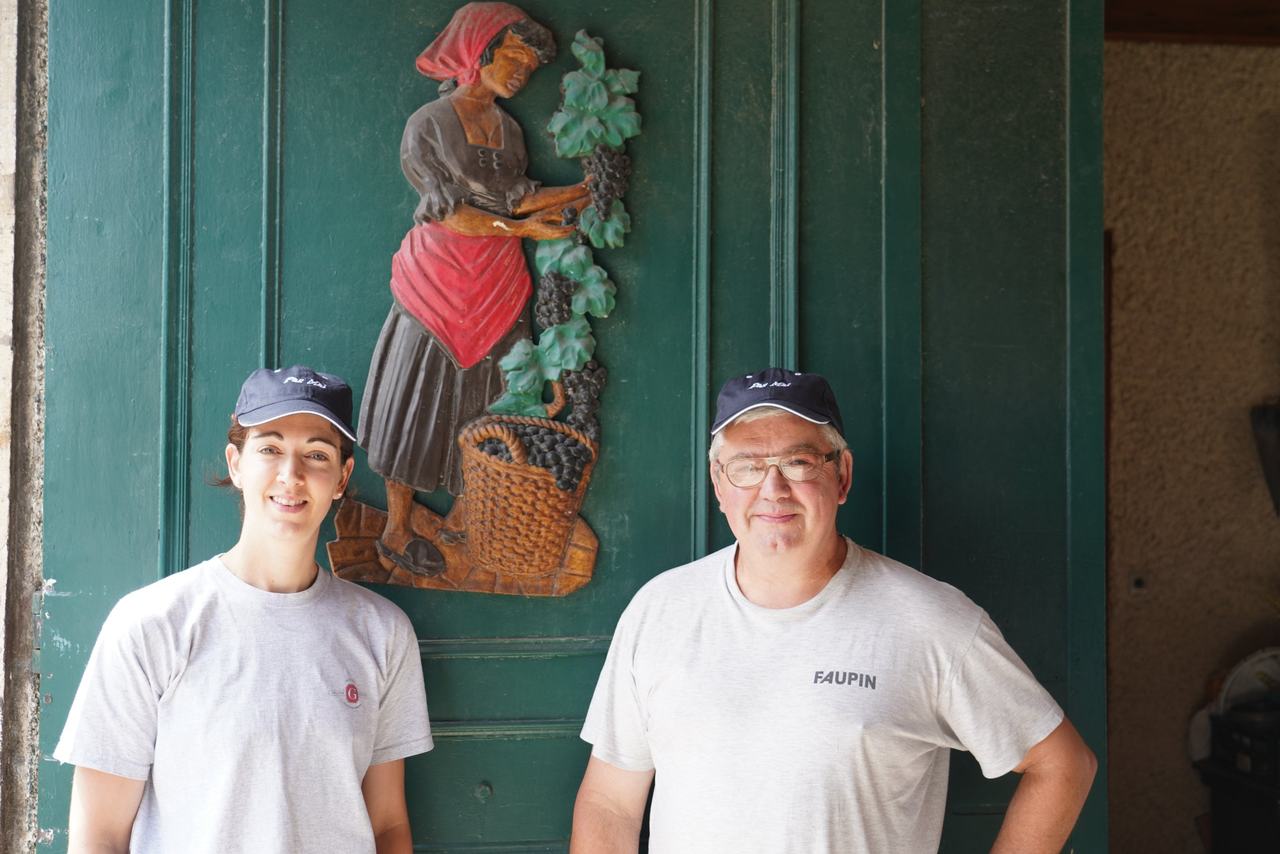
The village from every angle, in a single sitting.
Honoré Gavignet worked at the Domaine de la Romanée-Conti until 1920 and then went home to farm his own. Five generations later the family holds fourteen hectares and something like a dozen appellations inside the commune of Nuits, which means they can show you the village from every angle, Chaboeufs to Bousselots to Pruliers, in a single sitting. A good deal of it is old "Pinot Fin," which gives grace in years when Nuits can turn brutish. Philippe ran it from 1992 and, in December 2024, handed it to his children Elodie and Benoît. Watch that space.
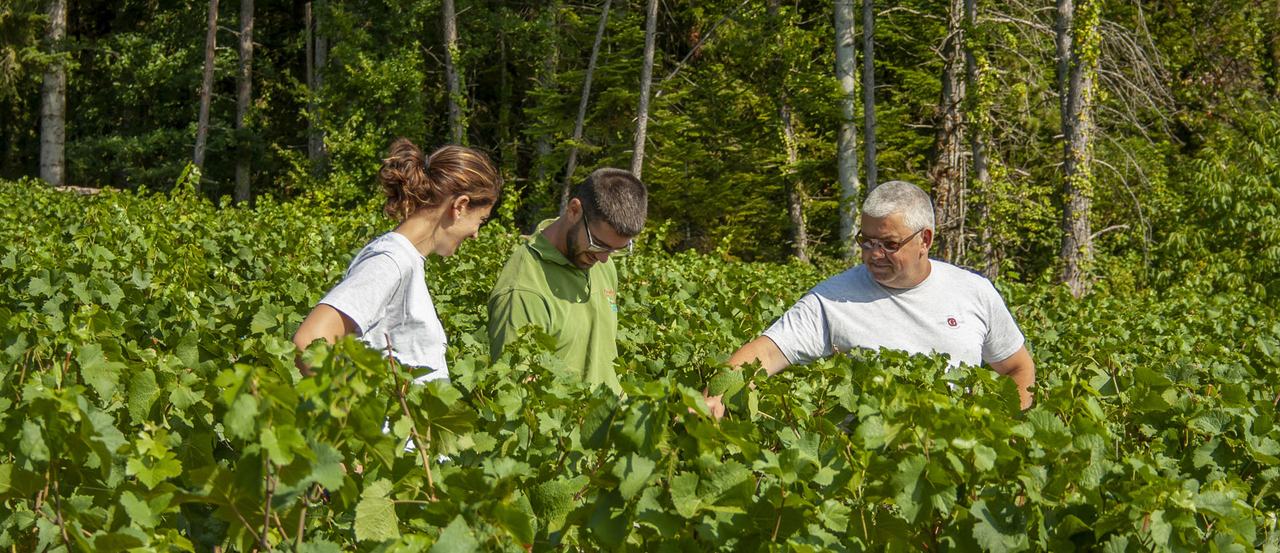
02 · Born at the Romanée-ContiA vegetable grower, a soldier, a banker, and the first full-time vigneron.
The great-grandfather grew vegetables at Les Maillys, near Auxonne on the plain, and the business was bad enough that Honoré Gavignet, born 1879, went to Vosne to work as a vineyard hand at the Domaine de la Romanée-Conti. He married Marie Drouhin, who worked there too, and their son Gabriel was born on the domaine in 1906. In 1920 Honoré left to make his own: a hectare and a half of Les Chaboeufs, which he would split three ways among his sons. Gabriel became a career soldier (Lunéville, Montauban, Issoire, Germany), came home to Nuits in 1947, and ran the Hospices de Nuits-Saint-Georges, helping to found its wine auction in 1962. His son Michel was a banker until 1970, when his mother-in-law died and the vines came to him; he had married Nelly Chauvenet, Nuitonne de souche, whose father owned a few rows and presided over the cave coopérative. Michel made wine until 1991.
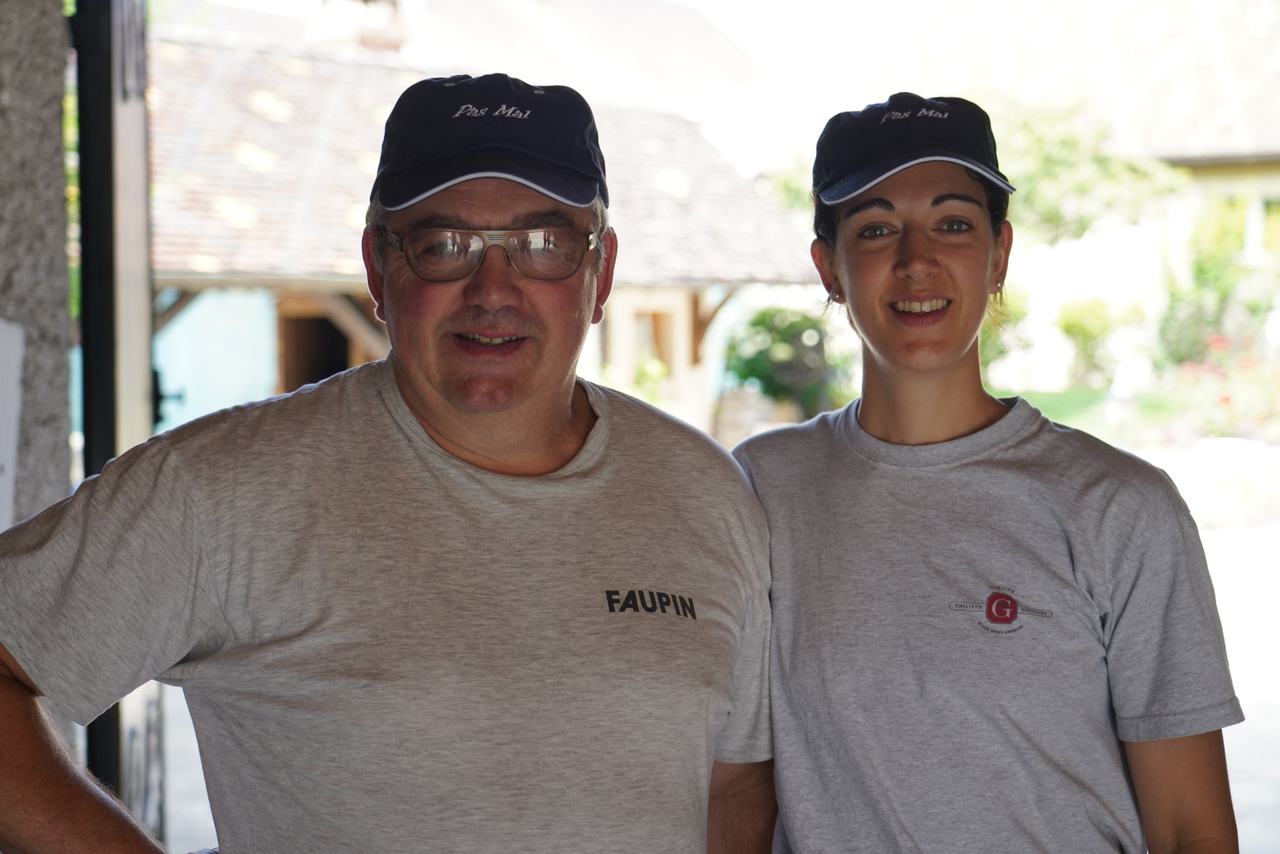
Philippe had wanted to be a chef. He joined his father in 1979, at eighteen, and the Côte tested him at once: hail on four and a half hectares that first year, a scrap of a crop in 1980, frost in 1981, the grandfather paying the bills. In 1984 Michel gave him the choice. “It was a scary time. I chose to carry on.” When Michel retired in 1992 the three family holdings that had been pooled with his uncle at Gavignet-Béthanie were divided, and Philippe started with eight hectares and became, as the family puts it, “the first to be able to devote himself body and soul to the vine and the wine.” Benoît joined in August 2015 and cleared and planted the Hautes-Côtes parcels beside his father; Elodie came in January 2018 and runs the house’s voice. On 23 December 2024 Philippe signed the domaine over to the two of them: “each one’s passion, their complementary skills and their father’s trust allowed them to take the reins with complete serenity.” Philippe has retired. The domaine is theirs now, and the 2025 vintage (the first entirely under their names) is the one to watch.
It was a scary time. I chose to carry on.
Philippe Gavignet, on 1984
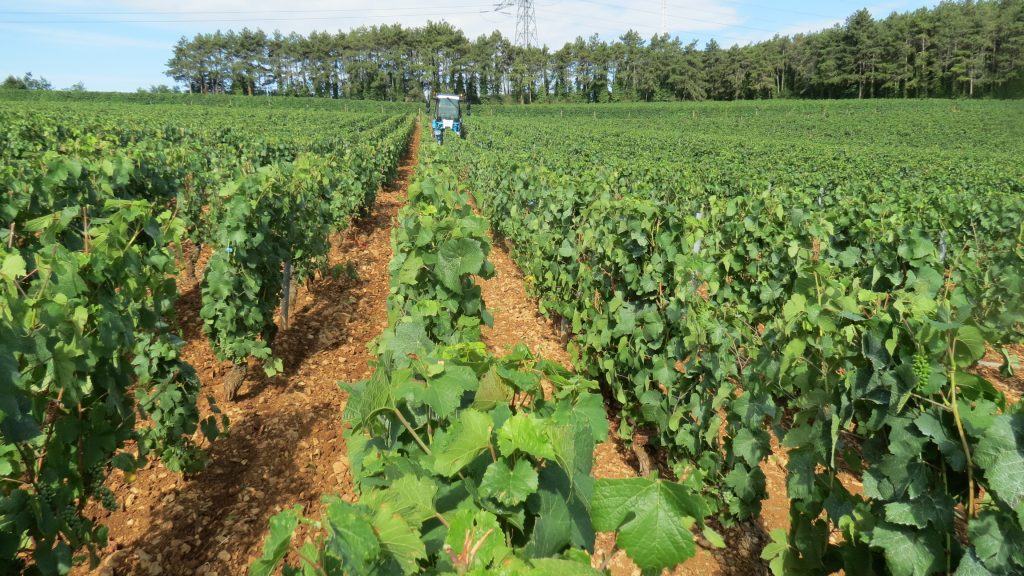
03 · Nuits, north and southChaboeufs in the cool valley, Bousselots on the deep clay, Thorey on the Vosne side.
Nuits is two villages divided by the Meuzin, and the Gavignets farm both. South, toward Prémeaux, Les Chaboeufs sits in the low part of a narrow cool valley between Vaucrains and Perrières: forty centimetres of reddish-brown clay-limestone full of iron, a hectare of the two that exist, vines of 1960, 1990 and 1994 and a block replanted in 2023. “Les Chaboeufs always has this slightly peppery, spicy character,” Philippe says. “The grapes are always very ripe there. Some years you get a wine which almost resembles a Côte-Rôtie.” It takes the most new oak in the cellar, a third, and it is the wine the Guide Hachette keeps crowning. Beside it, half a hectare of Les Pruliers, 1974 vines on deeper, stonier ground, the coup de cœur of 2015 and again of 2017.
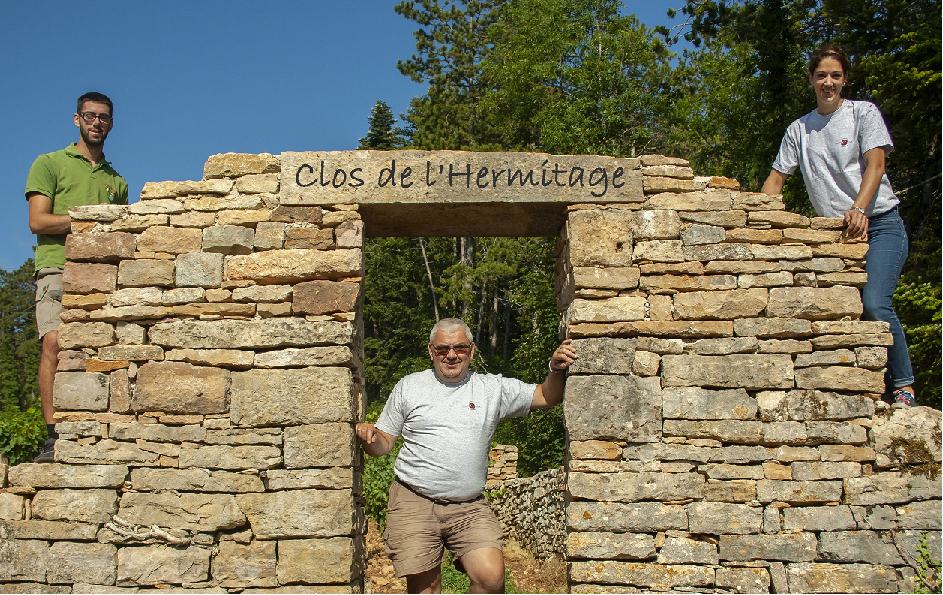
North of the town, Aux Bousselots is the opposite soil: three or four metres of clay, rich in active limestone, the terrain bosselé that gives the name. Sixty-three ares planted 1946, 1963 and 1970, austere when young, opulent later. Above it at the forest line on the Vosne side, Les Argillats, a hectare of red from 1958 to 2015 plantings and half a hectare of white that Philippe took on in 1986 when it was all Pinot Blanc, the old Gouges mutation, and interplanted with Chardonnay; the two are picked days apart and pressed separately. Below Bousselots, La Charmotte on the Meuzin’s alluvium. On the steep Vosne edge, twelve ares of Aux Thorey, planted 1943. The village Vieilles Vignes is five lieux-dits (Belle Croix, Aux Allots, Saint-Jacques, Aux Tuyaux, Les Creux Fraîche-Eau) with vines from 1926, 1955 and 1965; the Hachette calls them octogenarians. These oldest blocks predate clonal selection altogether, which is what the trade means by pinot fin. And above it all, at three to four hundred metres, the Hautes-Côtes: the Clos des Dames Huguette by the television mast, two hectares the family thinks the best site in the Hautes-Côtes de Nuits for its nearness to the Nuits line (“fruit, finesse and elegance. It is never a monster”), and the two new ones Benoît and his father cleared from scrub at Prémeaux at the mayor’s invitation, La Montagne and the Clos de l’Hermitage.
04 · Eight days cold“We are still paying for the excesses of previous generations.”
Lutte raisonnée since 2000, HVE level 3 from the 2019 vintage; herbicides gone, treatments cut back. Philippe’s line on it: “We are still paying for the excesses of previous generations. I focus much more on terroir today. It’s the charm of Burgundy, the different climats.” Hand harvest into small cases, a vibrating table and a sorting table, and every red destemmed completely; this is a house that believes in the berry, not the stem. Then eight days of cold maceration before the fermentation starts, on indigenous yeasts, ten to fifteen days in temperature-controlled vats with two punch-downs a day. The Hachette, tasting the 2010s, put its finger on the result: “concentrated, intensely aromatic thanks to long cold macerations.”
Sixteen to eighteen months in barrel for the Nuits, a quarter new, thirty per cent on the Chaboeufs; twelve months and a fifth new for the Hautes-Côtes; a tenth for the Bourgogne. Whites start in steel at eighteen degrees on their own yeasts and finish in 300-litre barrels on the lees. Philippe on having everything in one village: “It’s very convenient, but at the same time it makes me more vulnerable when there is hail or frost.” He was hailed on, frosted and tested from 1979 onward and handed over a domaine in the best shape of its life. Elodie and Benoît have planted the first new parcels in the family in half a century, and are sitting on a 1926 block in Belle Croix from which, they say, something will be revealed in 2028.
Les Chaboeufs always has this slightly peppery, spicy character. Some years you get a wine which almost resembles a Côte-Rôtie.
Philippe Gavignet
05 · What they say“Un domaine très en vue pour ses nuits-saint-georges.”
This is a Guide Hachette house, and the Guide has been generous: a double coup de cœur in 2013 for the 2010 Chaboeufs and Bousselots (“Philippe Gavignet is confirmed as an excellent winemaker”) and again in 2016 for the 2013 Chaboeufs and Argillats: “What a 2013 vintage for Philippe Gavignet, who soars above the selection with a fine rain of stars and no fewer than two coups de cœur… a great Nuits for the cellar, ample and homogeneous.” Pruliers took the coup de cœur for 2015 and for 2017, “a Nuits for the great days”; the Bousselots 2015 two stars for “ampleur, richesse, opulence même.” The 2027 Guide gave the new Hautes-Côtes La Montagne blanc a coup de cœur (“une cuvée Montagne au sommet”) and a star apiece to the 2024 Pruliers, Chaboeufs and Dames Huguette, in what it called a vintage for vignerons. Jasper Morris: “supple, attractive,” at “sensible prices.” Bill Nanson on the 2012 Vieilles Vignes: “silky and lithe with good concentration.”
The thing to know for a list: this is Nuits with the hard edges planed off (ripe, cold-soaked, velvet rather than leather), and it is priced the way Nuits used to be.
Un grand nuits de garde, ample et homogène.
Guide Hachette, on the 2013 Chaboeufs
In the vineyard
& cellar.
- Holding
- Fourteen hectares, sixteen cuvées, all but half a hectare of Aligoté inside the commune of Nuits-Saint-Georges: four premiers crus (Chaboeufs 1 ha, Bousselots 0.63, Pruliers 0.51, Thorey 0.12), four village lieux-dits, four Hautes-Côtes, Bourgogne
- Since
- Honoré Gavignet from 1920 after the Romanée-Conti; Gabriel; Michel from 1970; Philippe from 1979, in charge from 1992 until his retirement; Elodie and Benoît in charge from December 2024
- Farming
- Lutte raisonnée since 2000, HVE level 3 from 2019; no herbicides; hand harvest in small cases, vibrating and sorting tables
- Reds
- 100% destemmed; eight days of cold maceration; indigenous yeasts; 10–15 days, two punch-downs a day in temperature-controlled vats
- Élevage
- Nuits and premiers crus 16–18 months, 25% new (Chaboeufs 30%); Hautes-Côtes 12 months, 20%; Bourgogne 12 months, 10%
- Whites
- Fermentation begun in steel at 18–20°C on native yeasts, finished in 300-litre barrels on the lees, 9–10 months, 20–25% new; Argillats blanc is Chardonnay and Pinot Blanc, pressed apart