
Gevrey that reveals rather than declares.
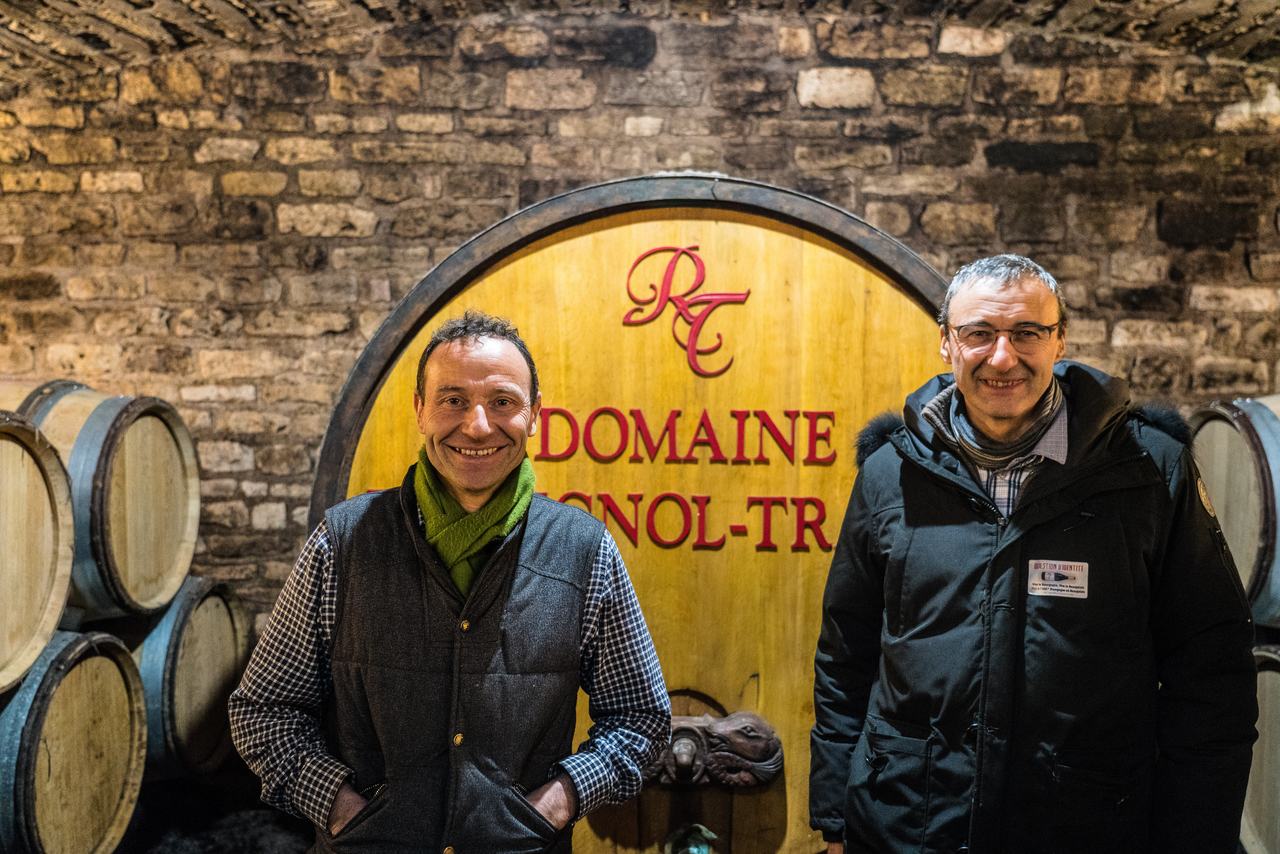
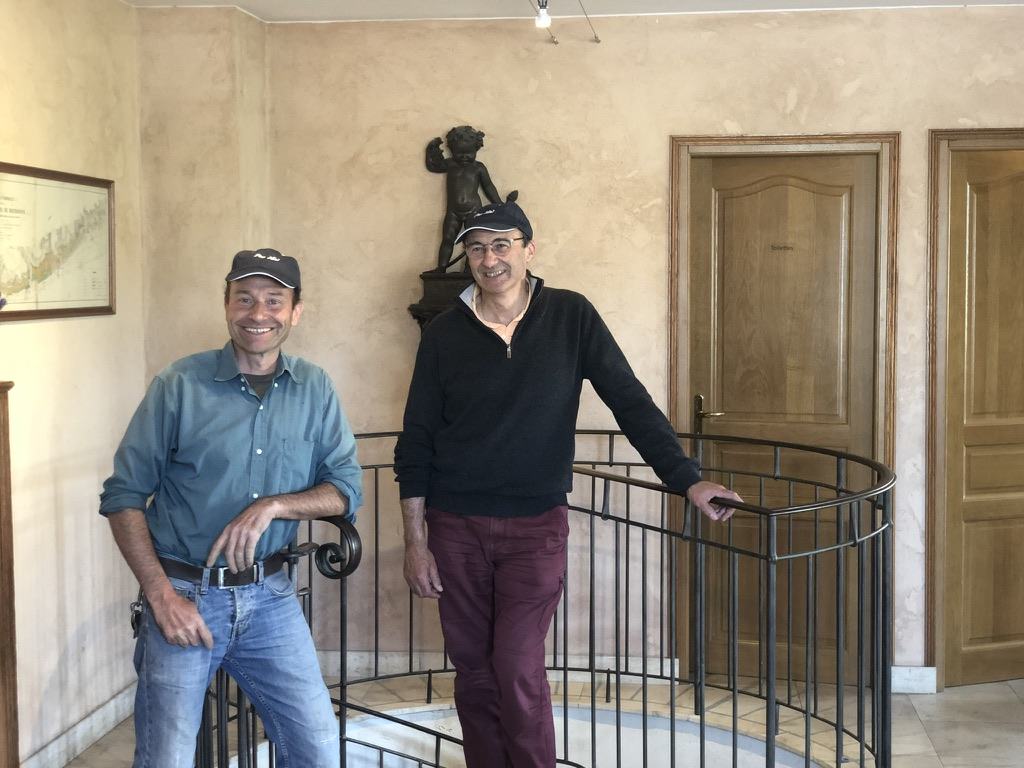
Brothers Nicolas and David have run this since 1990, and they were early: first parcel converted to biodynamics in 1997, the whole estate by 2004, Demeter-certified in 2005, back when that decision cost you money and got you laughed at. Thirteen hectares across Gevrey, Beaune and Savigny, and a house philosophy that is essentially subtractive: don't extract, don't push, don't correct. What comes out is lifted and detailed, with a nervous energy to it: Gevrey that reveals rather than declares.
02 · The partageTwo cousins, one cellar, and the vines divided in 1990.
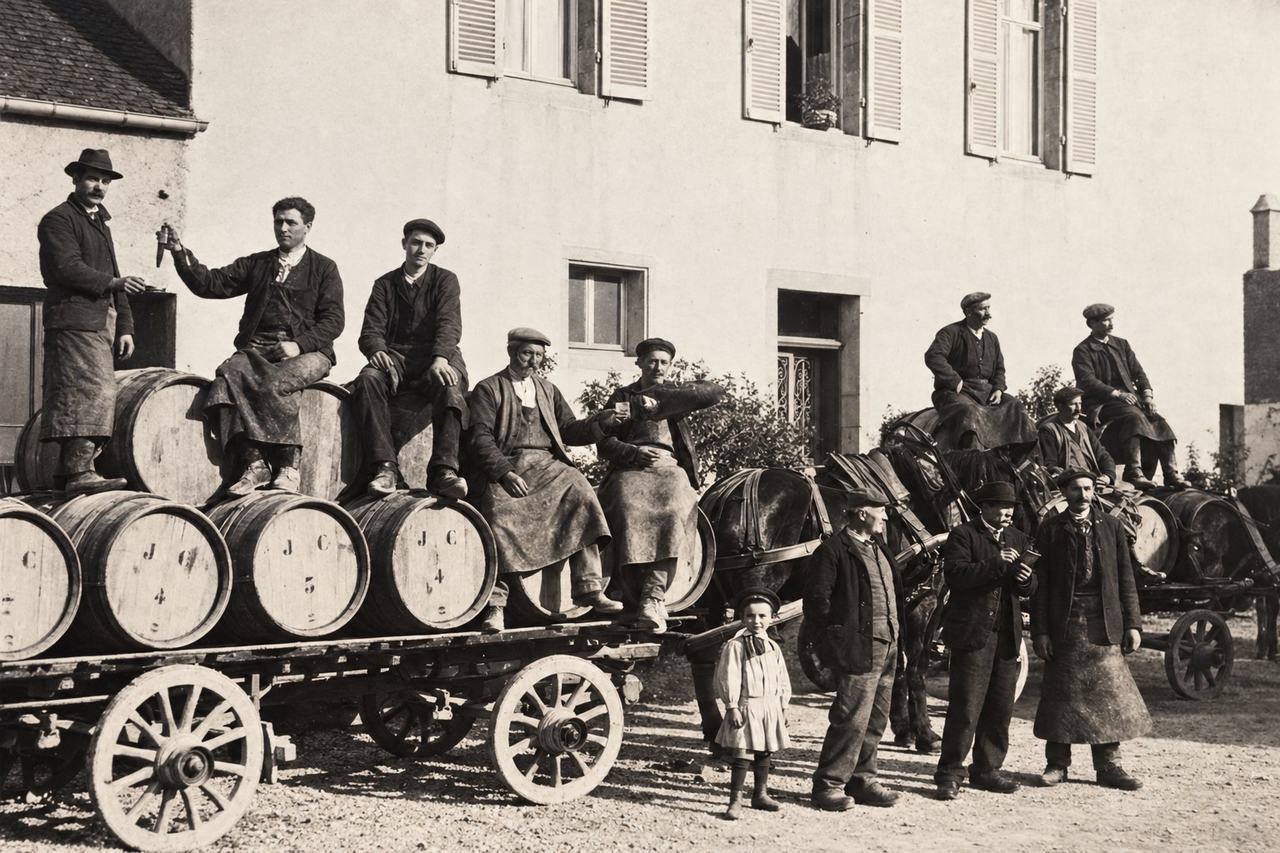
The Trapets came to Gevrey from the Dauphiné by way of Chambolle; Louis Trapet, born 1846, married Marie Raillard of Gevrey and moved into the village in 1871. It was his son Arthur, 1872 to 1940, who assembled the holdings that still define both branches of the family: Chapelle-Chambertin in 1892, the Clos Prieur in 1893, Latricières in 1904, and the first plot of Chambertin itself in May 1919, the spring after the war. The photograph above is from the harvest of 1909, three generations of them in leather aprons on the cart, with the new wine in barrel waiting for the négociant’s cart from Beaune. Maison Calvet bought it then, as the Beaune houses bought nearly everyone’s. Arthur’s son Louis built on it, and in 1961 Louis’s daughter Mado married Jacques Rossignol, from a Volnay family of growers, who came north to work the Trapet vines. Domaine Louis Trapet ran that way until the 1989 vintage.
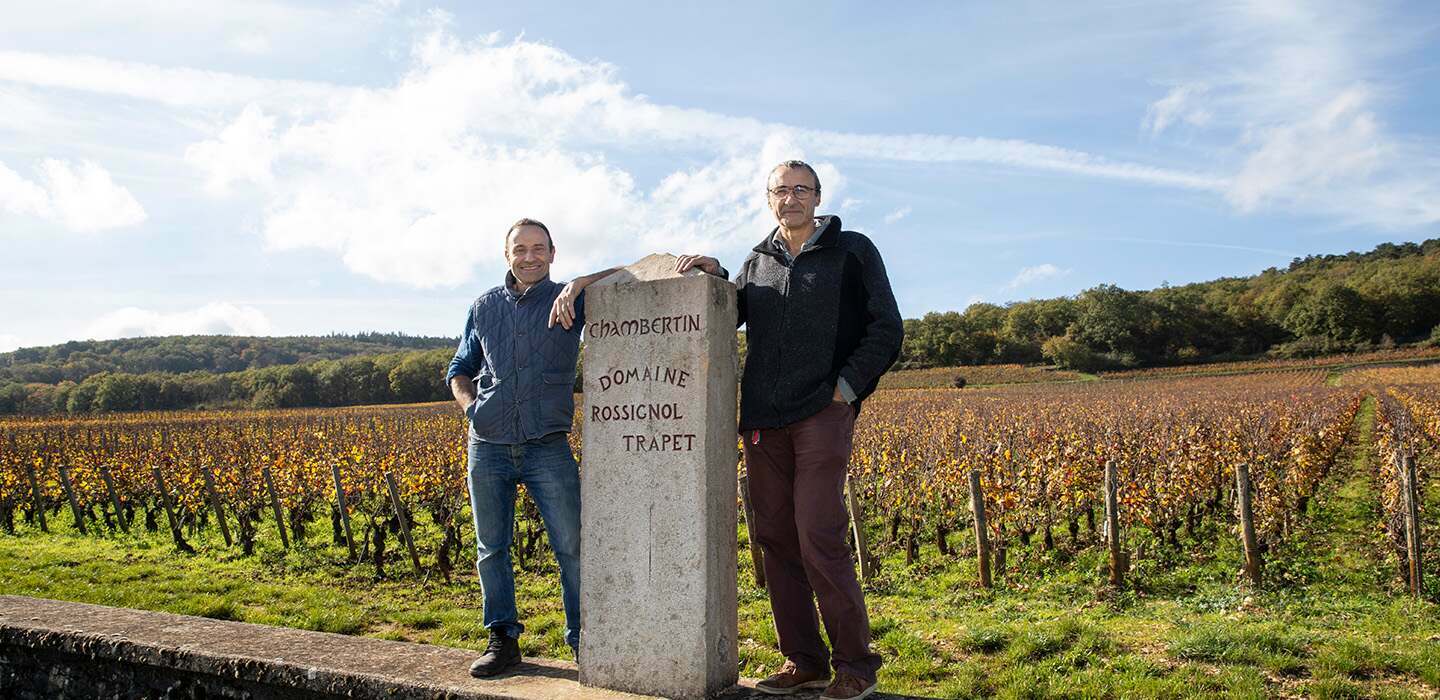
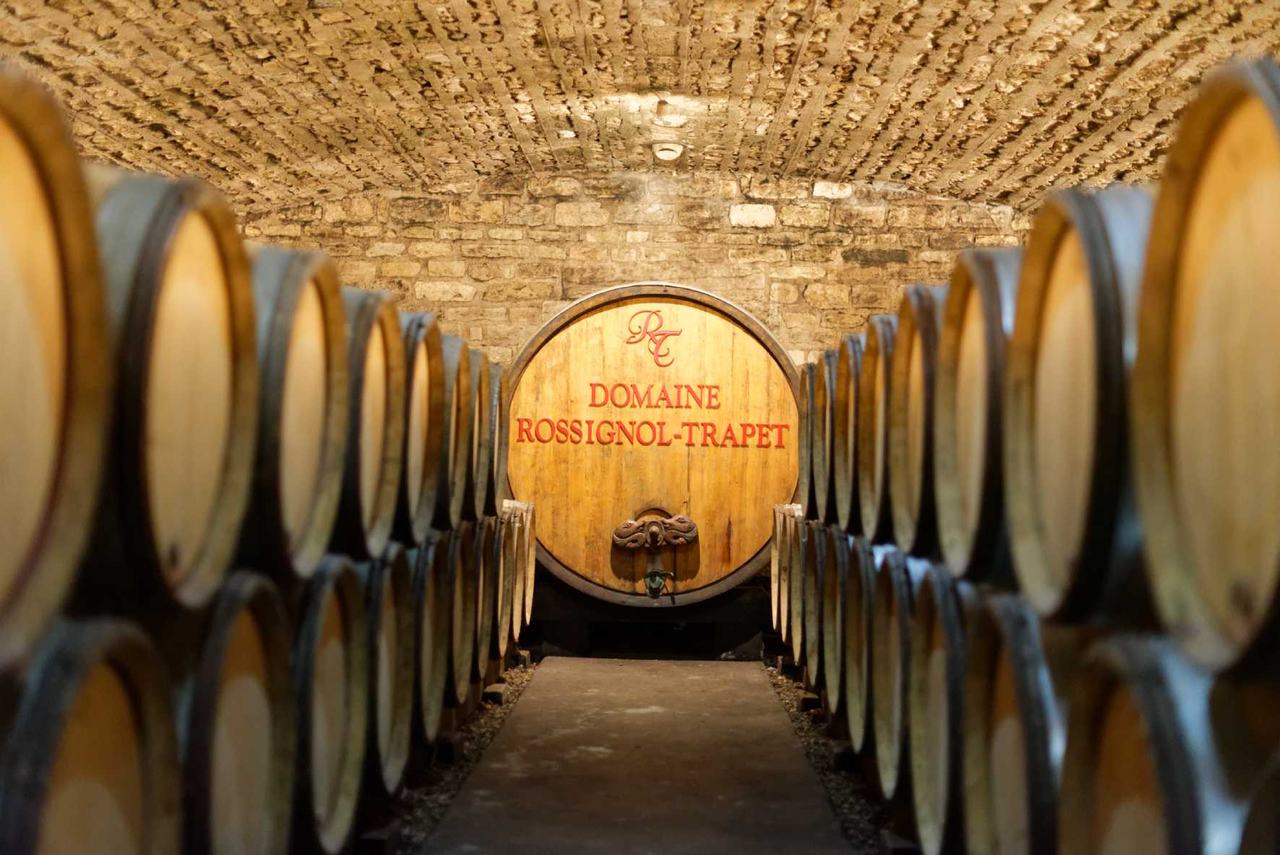
Then the cousins came home from their studies and the estate was divided: le partage, the word every Burgundian family knows. Jean Trapet’s son Jean-Louis took Domaine Jean Trapet; Mado and Jacques’s sons David and Nicolas took their half and founded Rossignol-Trapet, with the 1990 vintage. Both halves still own Chambertin, Latricières and Chapelle; the Rossignol side added two hectares of Beaune and Savigny that had come into the family through Jacques. The brothers trained at Beaune and Toulouse. David leans to the cellar, Nicolas to the office and the visitors, and the two of them have now run it longer than their grandfather did. Thirty years in, the cellar built in 1983, part underground and naturally damp, is still the one they use.
03 · ChambertinA cereal field beside the Clos de Bèze, and the first use of a word.
The name descends from a Burgundian called Bertin (Berht-in, son of Berht the Bright), who owned a field beside the monks’ Clos de Bèze and, copying their example, planted it to the same vine by the same methods. The results were good enough that growers called the place only by its owner’s name, le champ de Bertin; it is recorded as Campo Bertuyn in 1219. In a document of 1584 the canons of Langres refer to a piece of vine audict climat de Champt Berthin, the oldest known use of the word climat in Burgundy, applied to what would become the grand cru.
The grand cru itself is under thirteen hectares on the mid-slope above the village, facing east at around 280 metres, a thin skin of brown limestone soil over the Bajocian rock, and the family owns a little over a hectare and a half of it: 1.55 hectares in two parcels, one toward Bèze and one toward Latricières, each running the whole width of the slope from the Route des Grands Crus to the wood. A quarter of the vines are the ones Arthur planted in 1919; the rest were replaced a few rows at a time, never wholesale. It is the last of the three grands crus picked after Chapelle and before Latricières, destemmed by about half, never punched down, raised a third to nearly half in new wood from François Frères and Rousseau for up to twenty months, and bottled unfined and unfiltered. It is the same subtraction as everything else here, applied to the one wine that can take anything. What that gives is a Chambertin of frame rather than flesh: dark, long, closed for a decade, with the iron and the rose that the limestone and the old vines bring. Allen Meadows on the 2009: “not a truly big Chambertin but it is powerful and serious and, more important still, impeccably well-balanced.” John Gilman, the same year: “a flat-out great wine.” Neal Martin on the 2022: “easily the best of the domaine’s 2022s.” The frosts decide the allocation (eighty-five per cent of it was lost in 2016), and in a normal year there are a few hundred cases for the world, of which New York sees a handful.
Latricières is the southern continuation, separated from Chambertin by a path, in the cold draught of the Combe Grisard, which is why it ripens last of all the family’s vines, and why it is always picked last. From the Latin tricae, things of little value, infertile ground: the medieval growers could not drive a stake where the rock surfaced, and called it Petite Merveille anyway. Three-quarters of a hectare, planted 1934 and 1957. The domaine’s own description, “a very racy grand cru, more about length than concentration,” is the one Jasper Morris confirmed on the 2022: “almost cerebral and very persistent.” Chapelle is the opposite temperament: directly below Chambertin, full east, the earliest and sunniest of the grands crus, forty centimetres of soil over fissured rock. The chapel the monks of Bèze built there in 1155 was razed after the Revolution; the vines in Les Gémeaux date from 1924, and the rows narrow to eighty centimetres at the ends, which, as Nicolas says, “works only with a horse.”
Almost cerebral and very persistent.
Jasper Morris MW, on the 2022 Latricières-Chambertin
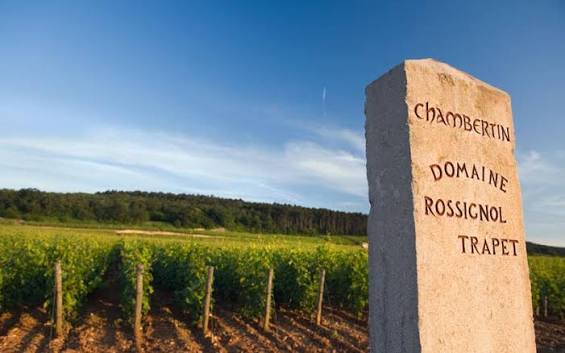
04 · SubtractionNo pigeage since 2003. Horsetail against mildew. Picked late.
Biodynamics began on three hectares in 1997 (Chapelle first), reached six in 2001 and the whole estate by 2004, with Ecocert certification from 2005 and the first fully certified vintage in 2008. What that means in a bad year: in 2018, when mildew came through Gevrey, the domaine fought it with horsetail preparations applied by hand, parcel by parcel. The vines average sixty years, planted at ten to twelve and a half thousand to the hectare, and the family picks late by local standards: the 25th of September in 2021, “a nineties-style picking date,” Nicolas said, and the second-earliest start ever in 2020, after 2003.
In the cellar the direction has been steadily toward less. Nicolas remembers his father punching the cap down three times a day in the 1980s. Petite Chapelle has had no pigeage at all since 2003; in 2020 nothing was punched down anywhere, only pumped over and drained and returned. Whole clusters vary by cuvée and year: a third to a half, more on Chapelle, which ripens soonest. Indigenous yeasts, a cold start, fifteen to twenty-five days in vat, pneumatic press, malolactic on its own by the end of November and no racking after it. New oak a tenth on the village wines, a quarter on the premiers crus, a third to a half on the grands crus, from François Frères, Rousseau and Chassin, dried three years, toasted medium-long. Twelve to twenty months, then bottled unfined and unfiltered. Berry Bros put the result well: “lightly extracted so never deep in colour, but built around subtle textures.” David, to Clive Coates: “classic, not modern.”
05 · What they say“A first-class address.”
Bill Nanson of the Burgundy Report, who has tasted here for twenty years, on the 2014s: “complex, balanced and interesting with fine energy… a first-class address,” and on 2022, “beautiful, sometimes great wines.” Neal Martin in Vinous on the 2022 Chambertin: “easily the best of the domaine’s 2022s.” Decanter gave the 2022 Latricières 97, “densely packed with substance but slightly closed initially.” John Gilman on the 2023 Latricières: “a brilliant wine in the making.”
The frosts are worth recording, because they explain the allocations. In 2016 the domaine lost two-thirds of Latricières and eighty-five per cent of Chambertin; in 2021 a third overall and seventy per cent in Beaune; in 2022 eighty per cent in Beaune again. What reaches New York is what survived.
Complex, balanced and interesting with fine energy… a first-class address.
Bill Nanson, Burgundy Report
In the vineyard
& cellar.
- Holding
- Fourteen hectares, all Pinot Noir: most of them in Gevrey-Chambertin from the Trapet side, the rest in Beaune and Savigny from the Rossignol side
- Grands crus
- Chambertin, 1.55 ha in two parcels down the whole slope, a quarter planted 1919; Latricières-Chambertin, 0.73 ha, planted 1934 and 1957; Chapelle-Chambertin, 0.54 ha across En la Chapelle (1960s) and Les Gémeaux (1924)
- Premiers crus
- Petite Chapelle (0.52 ha, clay), Clos Prieur (planted 1986, below Mazis), Les Cherbaudes, Les Corbeaux, Aux Combottes; Beaune Les Teurons (1.2 ha, planted 1978, iron-red stony soil)
- Village
- Gevrey-Chambertin Vieilles Vignes from eight or nine parcels across three soils; Aux Ételois, directly under Chapelle and Griotte; Bourgogne from En Grands Champs
- Farming
- Biodynamic from 1997 on Chapelle, the whole estate from 2004; Ecocert from 2005, Demeter certified; vines averaging 60 years; horse in the narrow rows
- Vinification
- Hand-picked into small cases, sorted, gravity to vat; a third to a half whole bunch by cuvée and year; indigenous yeasts; cold start; 15–25 days; no pigeage, only remontage and délestage
- Élevage
- New oak 10% village, 25% premier cru, 33–50% grand cru; 12–20 months; no racking after malo; unfined, unfiltered