
A builder’s family, a bench of river cobbles, and Ribolla Gialla in Napa.
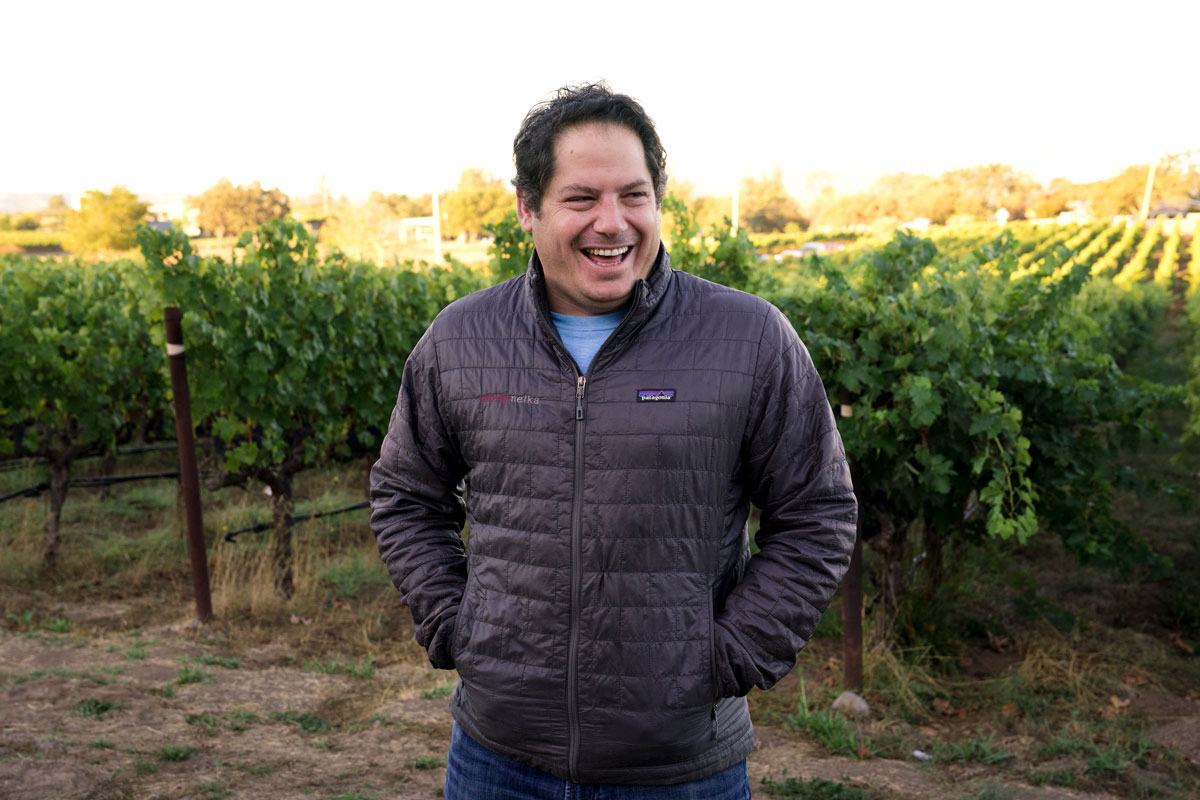
Mark Grassi built some of Napa’s best-known wineries for other people. In 1999 he and his wife Jami bought fourteen acres on lower Soda Canyon Road, on a bench of cobbles above the valley floor south of the Stags Leap District, and planted Cabernet. Their daughter Cassandra runs the winery now; her husband Miguel Luna, one of the most respected young viticulturists in California, farms it; and Maayan Koschitzky, director of winemaking at Philippe Melka’s Atelier Melka, makes the wines.
What sets Grassi apart is a white grape from the far northeast of Italy. Grassi first made Ribolla Gialla in 2009, when one Napa vineyard held about the only commercial planting in the country, and in 2016 Miguel planted his own block of it, Valentina’s Block, named for their daughter. From it come a still Ribolla and a sparkling one, made by the traditional method and disgorged without dosage.
Ribolla Gialla as a Napa sparkling wine is the kind of idea that should fail and somehow doesn’t. It is made with enough understanding of the grape’s acid that it comes out genuinely interesting, the aromatics intact and the bubbles fine. Antonio Galloni calls Grassi one of his favourite under-the-radar producers in the valley, and he is right.
02 · Mark GrassiThe carpenter who dropped out of enology school, and came back.
Mark Grassi grew up in the Bay Area and moved to Napa in 1980. He paid for his early viticulture and enology classes by working as a carpenter, liked the trade so much that he left college for it, and built Grassi & Associates into one of the valley’s most regarded construction firms. Over the years it built Ovid, Cade and buildings at Screaming Eagle, Continuum and Mayacamas. He kept taking wine classes at Napa Valley College the whole time; it was there he met Peter Franus, Grassi’s first winemaker. The two shared a palate, and found that whatever they both liked, the rest of the class usually didn’t.
Mark and Jami bought the Soda Canyon land in 1999, made their first wines in 2001 and their first commercial vintage in 2005. Cassandra grew up on the property listening to wine talk at dinner, worked at a San Francisco wine bar while at university, interned with the PlumpJack group, helped open Cade on Howell Mountain, and joined the family winery full time in 2010. She now runs every part of it. She and Miguel live on the property with their children, Valentina and Carlo; three generations of Grassis call it home. Valentina painted the label on the Ribolla.
03 · Soda Canyon RoadCoombs gravelly loam on a riverbed that runs east to west.
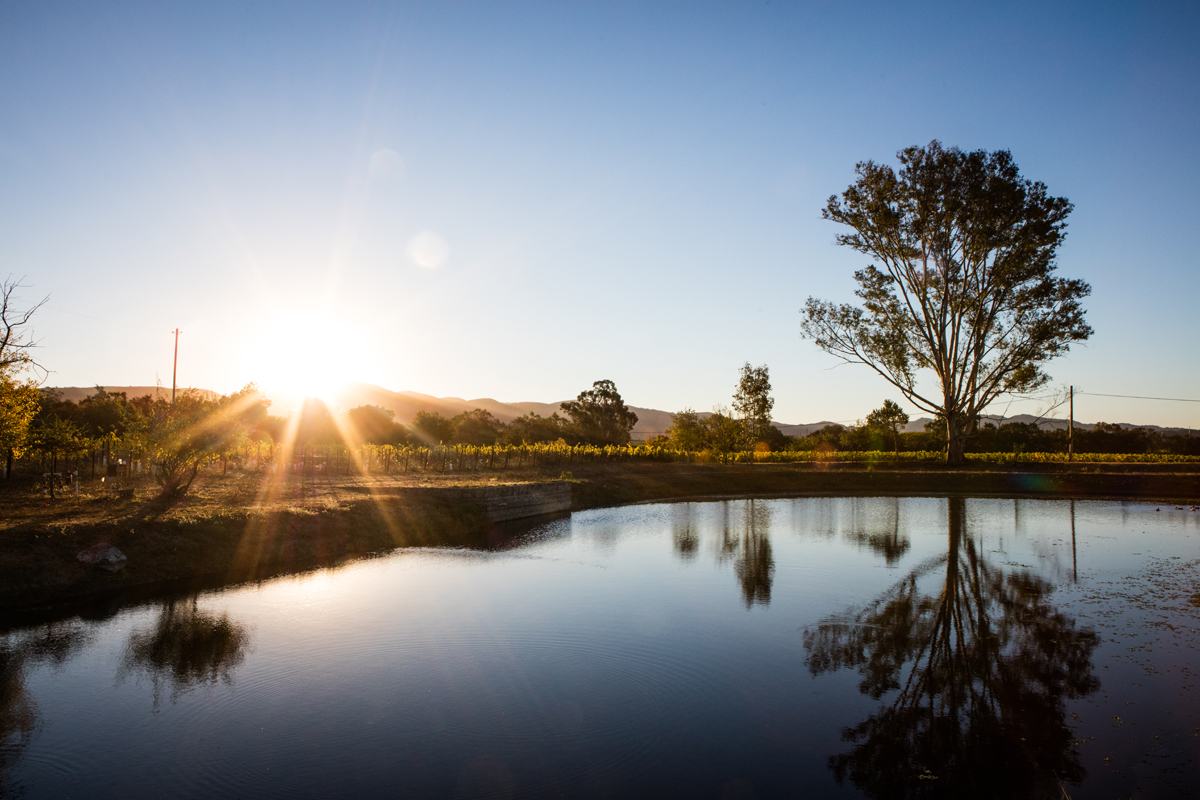
The estate is three miles north of downtown Napa, just off the Silverado Trail, in the eastern benchlands at the foot of the Vaca range: south of the Stags Leap District, north of Coombsville. It is not quite valley floor. The vineyard sits on an ancient riverbed and slopes to a drainage that runs through the middle from east to west, and the ground is full of small and middling cobbles. The soil is Coombs gravelly loam, a mix of sand, silt and pebbly clay that holds vigour down and concentrates the fruit, and holds enough water for the vines to get through Napa’s droughts.
Mark planted four acres of Cabernet Sauvignon and Cabernet Franc in 2001 with Mary Maher, now of Harlan Estate, who took the first soil samples and helped choose the clones: Cabernet 337, 4 and 6, Merlot 314 and Cabernet Franc 4. Miguel added the Ribolla in 2016. Five of the fourteen acres are vines. The rest is an olive grove, a fruit orchard, a garden and chickens.
04 · Ribolla GiallaA Friulian grape, a solera barrel, and no dosage.
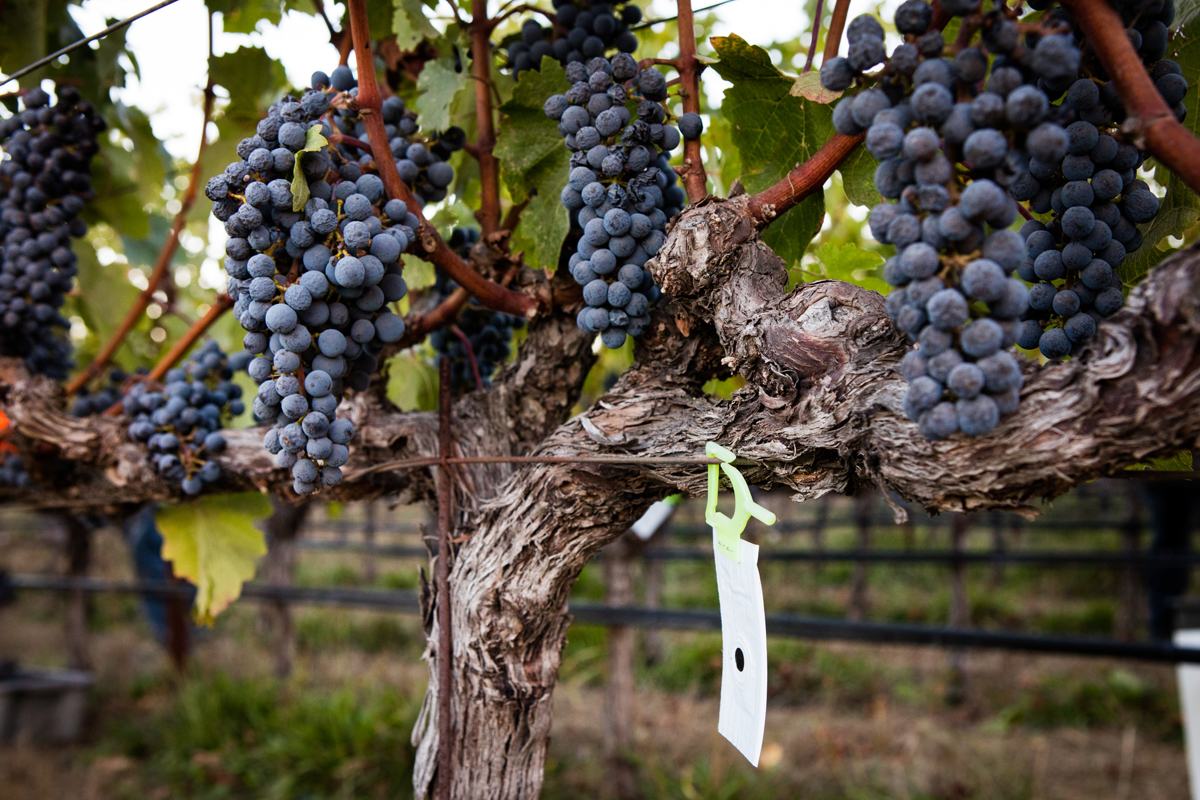
Ribolla Gialla is an old white variety from Friuli and the Slovenian hills across the border. Grassi’s first, in 2009, came from George Vare’s vineyard in Napa, then about the only commercial planting in the United States. Valentina’s Block was planted from cuttings that came from Friuli. The still Ribolla is whole-cluster pressed, settled overnight in tank and fermented in neutral French oak. The sparkling is made by the traditional method: twelve months on its lees, disgorged with zero dosage and topped up from a solera barrel the estate has kept going since 2017. The 2021 came in at 12.6 per cent alcohol, and there were about fifty cases of it.
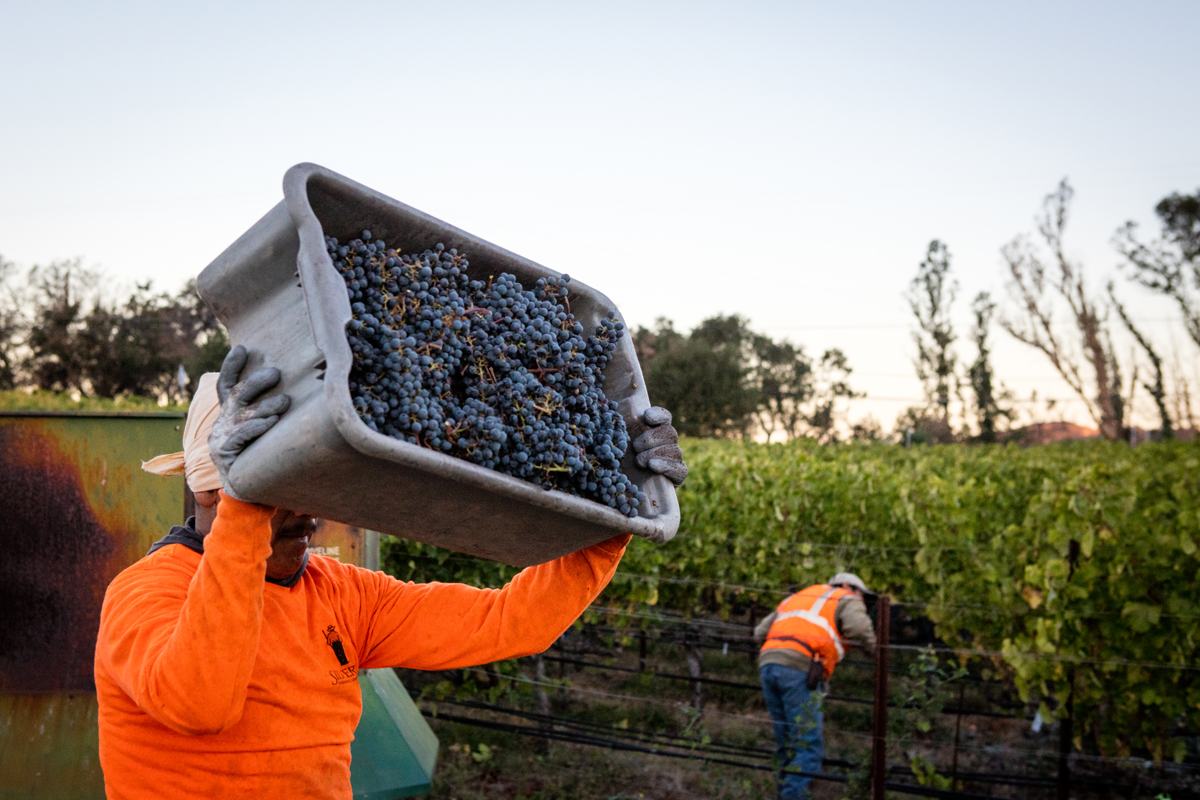
The Cabernet is serious in its own right. Each block is fermented separately in stainless steel, the Cabernet Franc co-fermented with one of the Cabernet blocks, and the wine spends twenty months in French oak, 60 per cent new. The Sangiovese is the Italian-instinct wine of the range: structure first, fruit second, made to go with food. The 2019 came from the Tom Fazika Vineyard, hand-picked on 25 September, fermented as whole berries in small vats with punch-downs; a hundred cases.
05 · Miguel and MaayanA Viticulturist of the Year in the rows, an Atelier Melka director in the cellar.
Miguel Luna came to California from Mexico at thirteen and was working in vineyards a year later. He interned at Pahlmeyer, Dana Estates, Atelier Melka and Château de Fieuzal in Bordeaux, took his degree in viticulture and enology at UC Davis in 2014, and became a partner in Silverado Farming Company in 2017. Wine Enthusiast named him Viticulturist of the Year in 2020.
Maayan Koschitzky came to Napa from Israel, worked at Screaming Eagle and Dalla Valle, and is director of winemaking at Atelier Melka; he has made Grassi’s wines since 2017. Their brief from the family is bright fruit and elegance, without high alcohol or over-extraction, everything in small batches. Owen Bargreen called Grassi “one of the outstanding wine projects in Napa.” Galloni’s line is the one to remember.
Grassi is one of my favorite under-the-radar producers in Napa Valley. The estate excels with both Ribolla Gialla … and Cabernet Sauvignon.
Antonio Galloni
In the vineyard
& cellar.
- Holding
- Fourteen acres on lower Soda Canyon Road; five planted to Cabernet Sauvignon, Cabernet Franc, Merlot and Ribolla Gialla
- Since
- Land bought 1999; first wines 2001; first commercial vintage 2005
- People
- Cassandra Grassi Luna (runs the winery), Miguel Luna (vineyards), Maayan Koschitzky (winemaker since 2017)
- Soil
- Coombs gravelly loam on an ancient riverbed, full of cobbles
- Vines
- Cabernet planted 2001 with Mary Maher; Ribolla Gialla (Valentina’s Block) planted 2016
- Cellar
- Cabernet: blocks fermented apart, 20 months in French oak (60% new). Sparkling Ribolla: traditional method, 12 months on lees, zero dosage, solera top-up