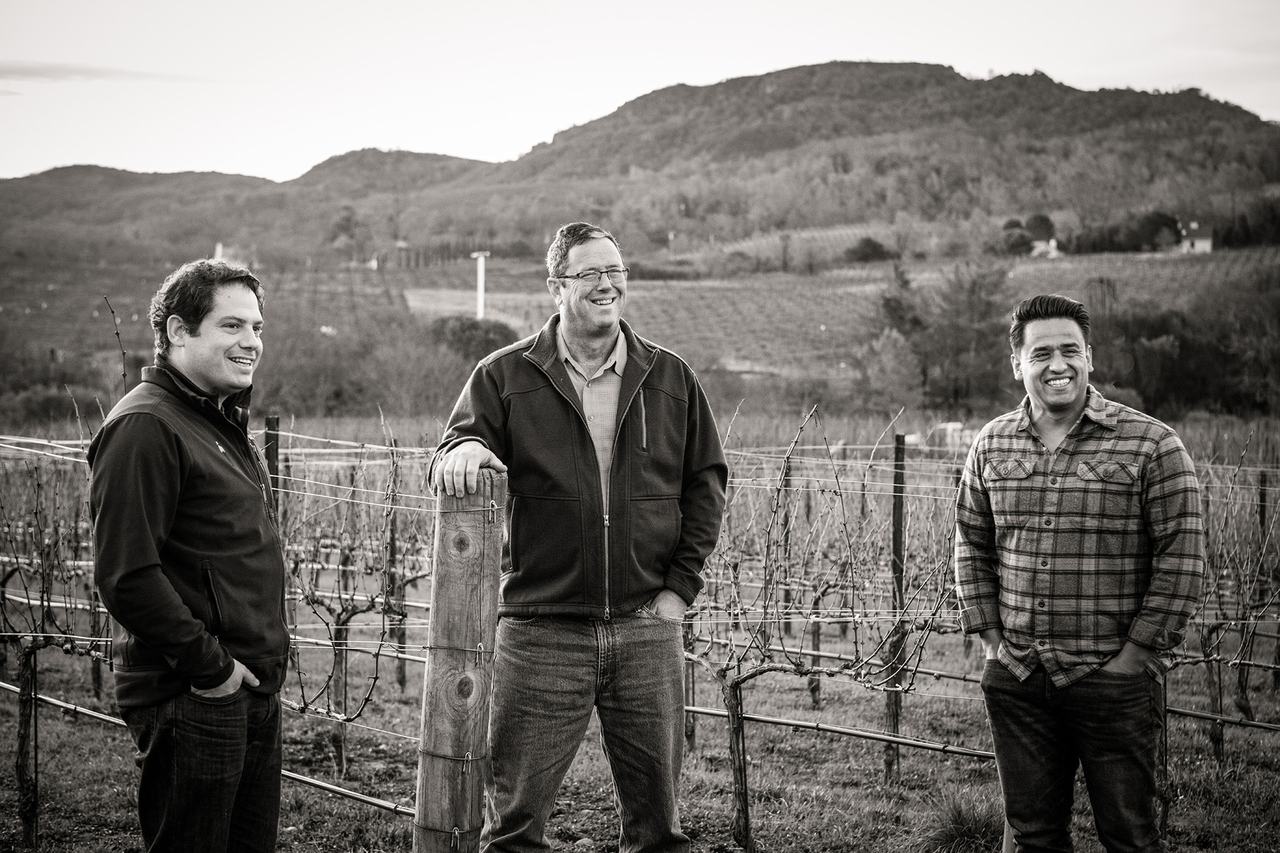
Growers first: three partners and a shovel.
La Pelle is French for the shovel, the one tool, as Maayan Koschitzky points out, that you use both in the vineyard and in the winery. He founded the label in 2016 with Miguel Luna and Pete Richmond of Silverado Farming Company, one of the most respected vineyard firms in Napa. Koschitzky is a partner in Philippe Melka’s consulting firm, Atelier Melka. Between them they farm every vine they make wine from. Without buying a vineyard, La Pelle runs like an estate: they choose the blocks, set the farming and pick when they want to.
That control shows most in the Syrah from Bien Nacido Block X, the wine from this address I find most revelatory. It is a California Syrah that does not announce itself as a California Syrah, with the pepper and the iron and the animal quality of the northern Rhône and none of the overripe sweetness that the variety piles up when it is grown in warmth. Koschitzky handles it like something fragile, adding nothing to what is already there. The Block 1 Chardonnay, from own-rooted vines planted in 1973, shares the same cool clarity.
In Napa they do the same with Cabernet: moderate alcohol, fresh acidity and real density, “powerful wines without becoming too heavy,” Koschitzky says, “like some of the great wines from Napa of the 1990s.” Total production is around three thousand cases.
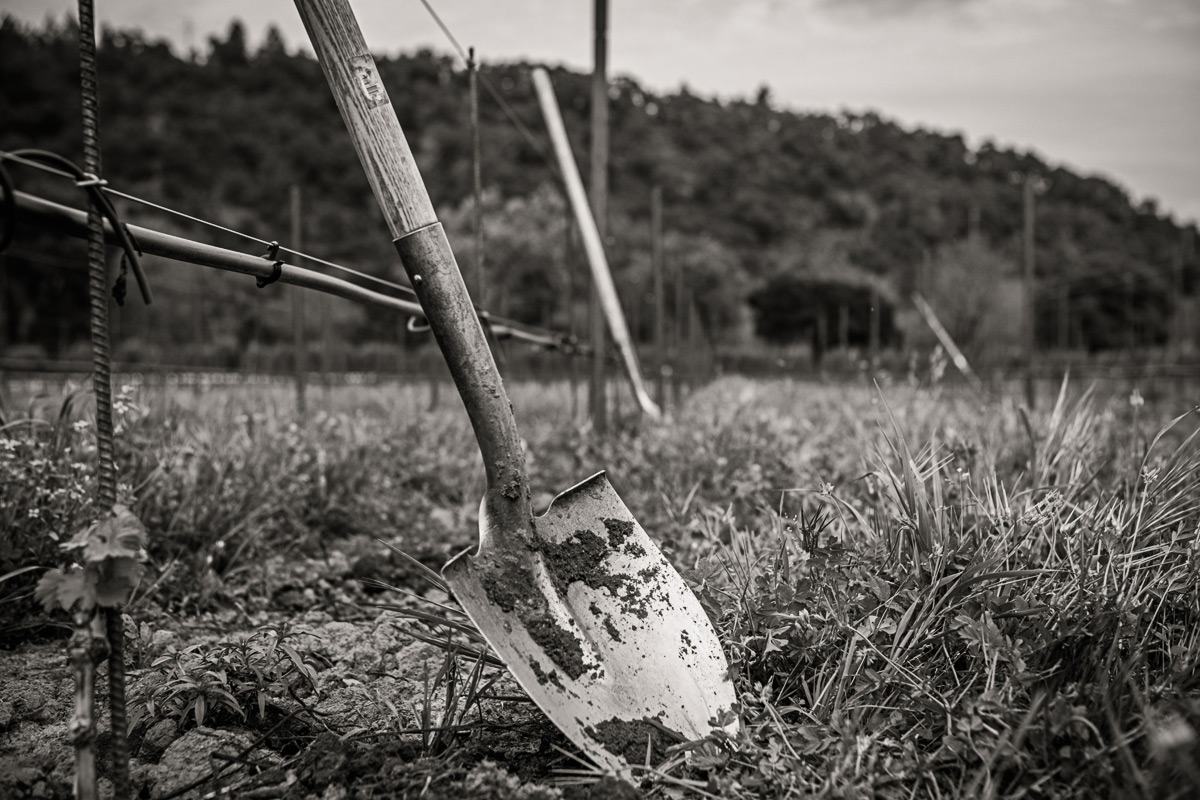
02 · The shovelA joke in a Bordeaux cellar that became a winery.
The name started as a joke. Fresh out of winemaking school, Miguel Luna worked a harvest as an intern at Château de Fieuzal in Bordeaux. “All I did all day long was dig out tanks,” he told Alder Yarrow of Vinography. He asked his bosses how to say shovel in French and told them that one day he would start a winery called Domaine de La Pelle. The name waited in his head until 2016, when he and Koschitzky, friends for two years by then, began talking about a project of their own.
Luna’s story is a Napa story. His father had worked the valley’s harvests since 1968 and brought the family from Mexico in 1996; Miguel worked his first harvest at fourteen, the next year. He went through St. Helena High School while working in the vines, spent five years at junior college while working full time, then studied viticulture and enology at UC Davis. He joined Silverado full time in 2015 and is now a partner there. Pete Richmond founded Silverado in 2001; he began his career with the Miller family, farming Bien Nacido.
If you think about it, the shovel is the only tool that you use both in the vineyard and in the winery.
Maayan Koschitzky, to Vinography
03 · Maayan KoschitzkyA viticulturist from Israel in Napa’s best cellars.
Koschitzky grew up in Israel and trained first in engineering. He worked his first harvest there in 2004 and spent seven years making wine in Israel before moving to Napa, where he worked as an assistant winemaker at Screaming Eagle and Dalla Valle. Philippe Melka hired him in 2014, made him director of winemaking in 2016 and a partner in 2019. He likes to point out that he is the winemaker with the viticulture degree, while Luna, the farmer, has the one in enology.
The farming is the point. Silverado farms for some of the best-known names in the valley, Dana, Brand and Vineyard 29 among them, and La Pelle draws only on vineyards Silverado manages. That lets Koschitzky and Luna decide the pruning, the canopy and the pick together. The farming is organic or sustainable depending on the site; Silverado stopped using Roundup and brought in two thousand sheep for the weeds. “I don’t like to say we pick early,” Koschitzky told The Wine Independent. “We farm to pick early. We pick the fruit when it is ripe.”
04 · Bien NacidoOwn-rooted 1973 Chardonnay and Syrah in the wind.
Bien Nacido means “well born.” The vineyard was planted in 1973 by the brothers Stephen and Bob Miller in the Santa Maria Valley, at the northern end of Santa Barbara County, where the valleys run east to west and the Pacific pushes fog and wind straight up them. The soils are Monterey shale loams with dolomitic limestone; the site sits high and takes strong onshore winds all season. It is one of California’s great cool-climate vineyards, and one of its oldest vineyard names on a label.
La Pelle’s first Bien Nacido vintage was 2019; Richmond had started his career on this ground. Block I is the oldest Chardonnay on the property, own-rooted and planted in 1973. The grapes are pressed as whole bunches, fermented with native yeasts and native malolactic in barrel in a cool cellar, kept ten months in French oak (a quarter new) and finished in steel; 264 cases of the 2021, which the winery calls the best Bien Nacido wine it has made. The Block X Syrah goes in with thirty per cent whole clusters and some stems, ferments on its own yeasts for about sixteen days and ages in thirty per cent new oak. “We’re really a Napa company,” Koschitzky has said. “But the Syrah and Chardonnay from Bien Nacido are just too good to pass up.”
05 · NapaCabernet from vineyards they farm themselves.
La Pelle’s Napa Cabernets come from six Silverado sites in four districts. Alluvium, on the alluvial fans west of Highway 29 in St. Helena, has vines nearly forty years old and is their warmest site. Red Hen sits on gravelly loam in Oak Knoll, where the mountains meet the valley, and is farmed organically. Ceniza, Spanish for ash, is in Coombsville, on volcanic ash and loam. The Napa Valley Cabernet blends fruit from Coombsville, Oak Knoll, Oakville and St. Helena to show the vintage; the single-vineyard wines spend twenty-two months in French oak, most of it new. Alcohol on the Napa Valley and single-vineyard wines stays at or under 14.5 per cent.
Yarrow, tasting the first single-vineyard releases in 2021, found “the wines are excellent across the board, but the single-vineyard Cabernets are quite fantastic.” They sold out to the mailing list within two weeks. I would put it this way: this is Napa Cabernet for people who have stopped drinking Napa Cabernet, with the density they remember and the freshness they missed.
In the vineyard
& cellar.
- Founded
- 2016, by Maayan Koschitzky, Miguel Luna and Pete Richmond
- Farming
- Only vineyards farmed by Silverado Farming Company · organic or sustainable by site · no Roundup
- Santa Maria Valley
- Bien Nacido Block I (Chardonnay, own-rooted, planted 1973) and Block X (Syrah) · Monterey shale loam with dolomitic limestone
- Napa
- Alluvium (St. Helena), Red Hen (Oak Knoll), Ceniza (Coombsville) and Oakville fruit for the Napa Valley blend
- Cellar
- Native yeasts and native malolactic · whole clusters on the Syrah · French oak, 25–30% new on the Bien Nacido wines
- Production
- About 3,000 cases a year