Trade bookOpen an accountTech sheetsShelf talkersMake a payment
Pas Mal Selections
The families behind the wine · Burgundy · Marsannay

Domaine Sylvain Pataille

The most interesting career in Burgundy, and it is deliberate.

Marsannay · Certified Organic · MICHELIN · Selected

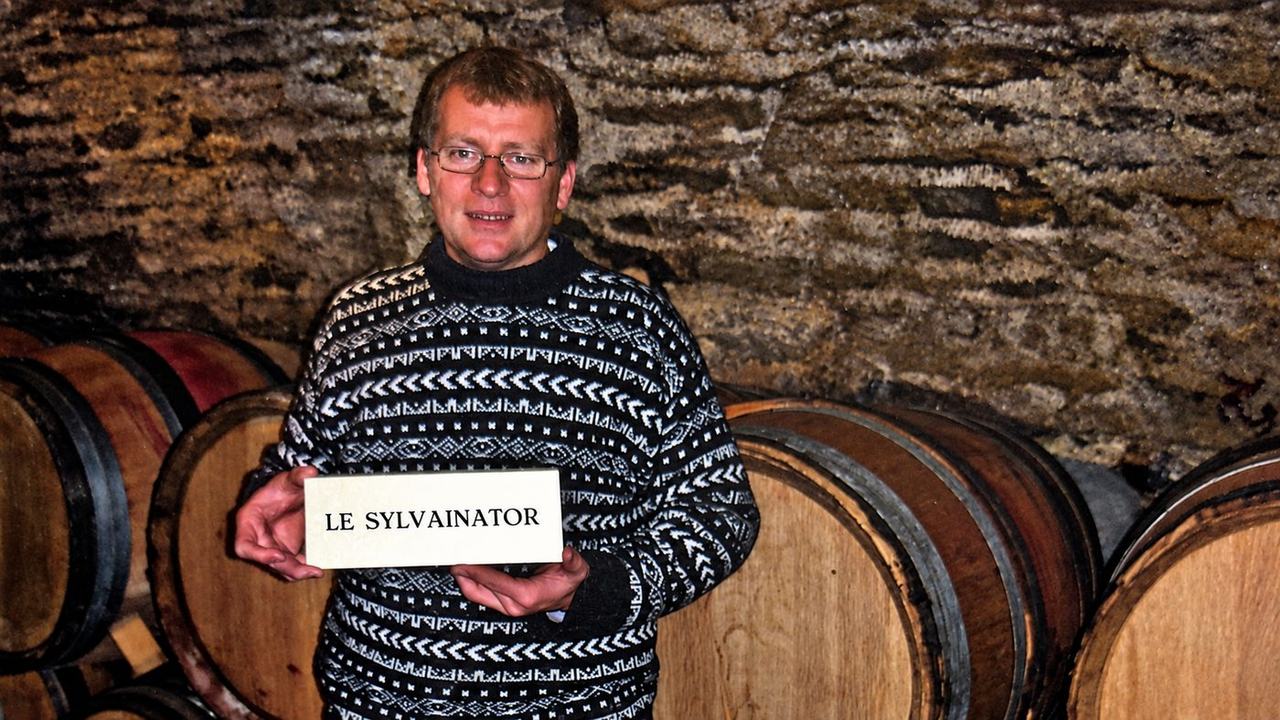
A young Sylvain Pataille in the cellar holding a sign that reads Le Sylvainator

Starting out · the young Sylvain, already “Le Sylvainator”

01 · The story

A village nobody wanted.

He began in 1999 with a single hectare of family vines in a village nobody wanted, and he has never left it: no Gevrey, no Chambolle, no upgrade. Fifteen hectares now, farmed biodynamically and ploughed in part by animal traction, which MICHELIN went out of its way to mention. Twelve cuvées, single lieux-dits, vines planted in 1929, and an Aligoté programme from massale selections that has single-handedly forced people to take the grape seriously again. He's a trained oenologist; half the Côte asks his advice. He spends it all on Marsannay. That is the most interesting career in Burgundy, and it is deliberate.

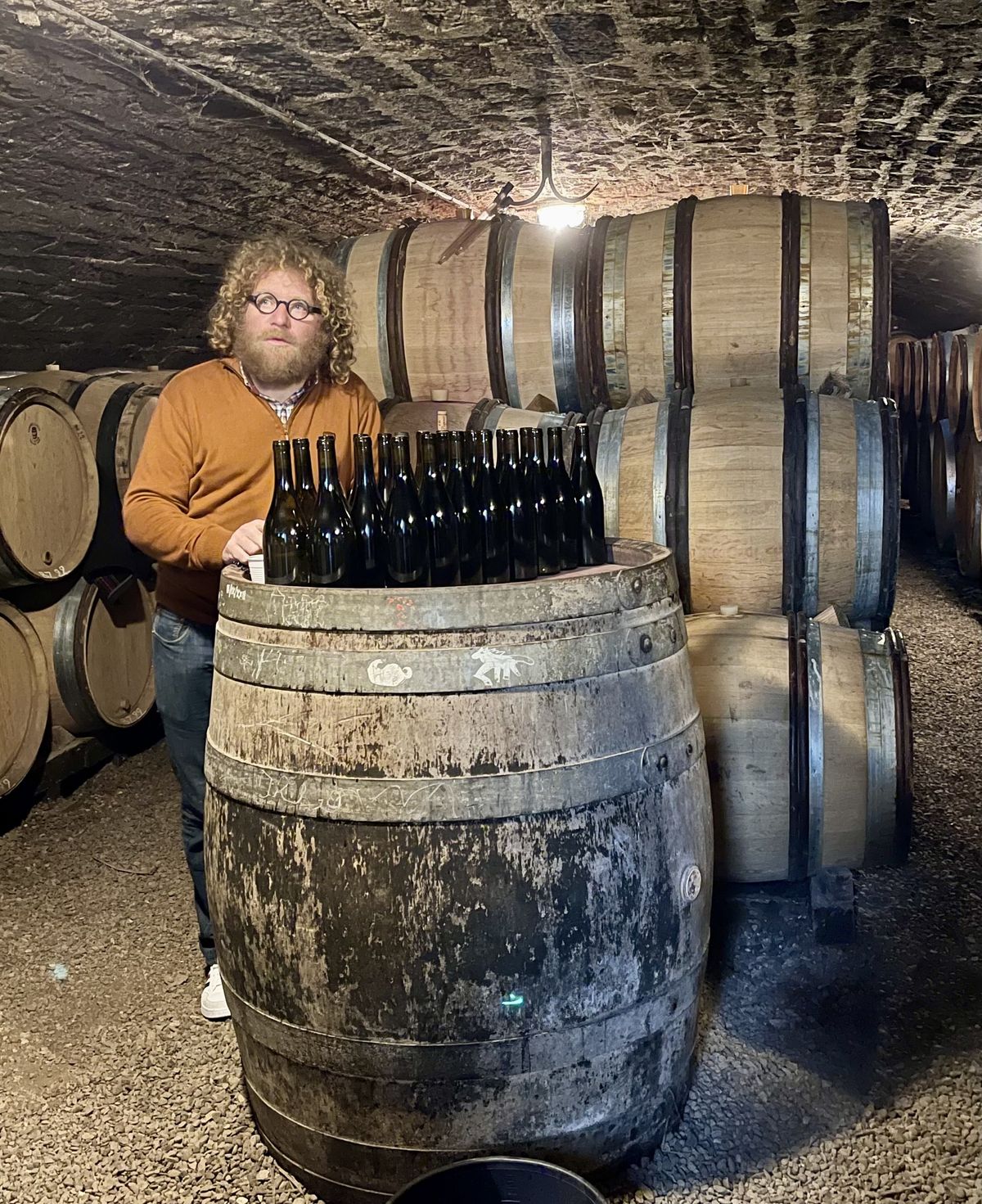
Sylvain Pataille in his cellar, a row of bottles lined up on a barrel
Sylvain in the cellar · Marsannay
02 · Starting out

A bus driver’s son, a grandfather’s two-tenths of a hectare.

Sylvain Pataille was born in Marsannay-la-Côte in 1975, in a family that had stopped making wine in the 1930s. His father drove a bus and helped a vigneron friend, Jean Fournier, in the vines; his grandfather Armand kept two-tenths of a hectare of Gamay and Aligoté, and Sylvain spent his childhood in them. He entered the Lycée Viticole de Beaune at fourteen and went on to Bordeaux for his oenology diploma.

From 1997 to 2001 he worked in Kyriakos Kynigopoulos’s laboratory in Beaune, analysing samples and advising estates up and down the Côte d’Or, sixty-five of them in one harvest by his count. He left because the work meant selling products, and because the wines were never his. “You try the wines during vinification and ageing,” he said later, “and after that you don’t exist anymore.”

So in 1999, still employed at the lab, he made his first wine from a single hectare: Gamay, in a tiny cellar at his parents’ house. Pinot Noir followed in 2000. By 2002, after two large estates released their plots, he had nine hectares, Clos du Roy and La Charme aux Prêtres among them, and old Aligoté that everyone else was pulling out. In 2004 he moved the winery to Chenôve, beside the Pressoir des Ducs de Bourgogne, and stopped machine-harvesting for good. His brother Laurent, also a trained oenologist, left his post at Château de Tracy in 2008 to become his right hand; his wife Maryse has run the office since the beginning.

Pas Mal was there early. Michael Feuerstein was the first to bring the wines to America, in the early 2000s, taking six cases of each cuvée when nobody in New York could have told you where Marsannay was. “Sylvain is like my third son, as far as I’m concerned,” he told SevenFifty Daily in 2025. Becky Wasserman, who guided us there, was among Sylvain’s first clients.

Everyone was tearing them out, and I said to myself: it’s our history, it’s our DNA in Marsannay.

Sylvain Pataille, on the old Aligoté vines, SevenFifty Daily

03 · The oenologist

Half the Côte asks his advice.

He is the rare grower who is also a working oenologist. After the laboratory he ran his own consultancy for about twenty estates across the Côte d’Or and the Côte Chalonnaise and taught at the CFPPA in Beaune; by the middle of the last decade he was talking about cutting back “to gain peace of mind,” and today he still advises a handful of younger growers who keep turning up in the magazines. He does not name his clients, and neither do we.

What the training gives the domaine is a distrust of recipes. He presses slowly on an old vertical press he adopted in 2005, works with ambient yeasts, uses whole clusters when the vintage allows (up to all of them) and holds the sulphur to about a gram per hectolitre, mostly at bottling. New oak rarely rises above twenty per cent; many whites see only seven- and eight-year-old barrels. Élevage runs eighteen months and sometimes two years, the bottling date decided by taste. He calls the result a “new old style.”

There have been many evolutions in my wine. I have found that the secret doesn’t exist.

Sylvain Pataille to Charles Curtis MW, Decanter, October 2025
04 · The Aligotés

Seven parcels, one grape nobody took seriously.

There are two Aligotés. The clonal Aligoté Vert of the 1970s yields eighty hectolitres and more and tastes of it. The older Aligoté Doré, which no nursery sells, survives only in old vineyards, and Sylvain has more single-vineyard Doré than anyone alive, propagated by massale selection from his own vines (with cuttings, for the newer plantings, from Jean-Marc Roulot). “Don’t forget,” he says, “that one of Aligoté’s parents is Pinot Noir.”

He vinified the plots separately from the start but bottled one regional wine for a decade. After the 2013 harvest he rang Becky Wasserman & Co with a question (“Am I crazy to want to bottle these separately?”) and made one barrel of each. Neal Martin called the results “solid evidence that this variety can produce wines every bit as entrancing as Chardonnay.” There are now seven, all vertical-pressed, ambient-yeast, raised in used wood because he finds new oak gives Aligoté an acidulated edge.

Le Petit Puits: 0.59 ha planted in 1929, red clay over limestone. La Charme aux Prêtres: planted 1949 on the mid-slope; the maps say crinoidal limestone, Sylvain says Ostrea acuminata marl, and he points to the reductive minerality in every wine from the site. Les Champ Forey: 0.30 ha planted 1932–61, east-facing gravelly limestone, 14,000 goblet-trained vines a hectare, about seventy-five cases a year. Les Longeroies: 0.16 ha planted 1938, light gravel over water-holding clay. Les Auvonnes au Pépé: a tenth of a hectare his grandfather planted, on clay-marl full of small limestone stones; twenty-five cases, reductive, needing three to five years; “it would be a shame,” he says, “to make red wine on this terroir.” Clos du Roy: 0.18 ha planted 1932–35 in Chenôve, on iron-red “rabbit earth” over grèzes litées and White Oolite, two years in 350-litre barrels. And a Bouzeron, from purchased organic fruit on the white marls of the only village appellation Aligoté has.

The map of the wines

One village, every wine.

Thirteen vineyards in Marsannay, from Chenôve in the north to Couchey in the south, and the wines that come from each. Same grower, same cellar, same way of working: what changes is the ground. Tap a grape to see where it grows.

North · toward DijonSouth · toward Gevrey

Chenôve

Clos du Roy

Iron-red “rabbit earth” over pink scree and White Oolite

About 270 m · the northernmost Marsannay site · Aligoté planted 1932–35

  • Aligoté Clos du Roy
  • Marsannay Clos du Roy
  • part of L’Ancestrale

The dukes’ vineyard until 1477. Proposed premier cru.

Le Chapitre

Light pink scree (grèzes litées) over White Oolite and Comblanchien

270–300 m · east-facing, moderate to steep · 1.05 ha

  • Marsannay Le Chapitre
  • Marsannay Blanc Le Chapitre

The Chapter of Autun’s vineyard. Sylvain thinks it the best ground in the village.

Marsannay

Les Longeroies

Light gravel over clay that holds water

275 m · south-east-facing · Aligoté 0.16 ha planted 1938

  • Aligoté Les Longeroies
  • Marsannay Les Longeroies

Proposed premier cru. One of the four he calls the great sites.

Champ Forey

Gravelly limestone

East-facing · 0.30 ha planted 1932–61 · goblet-trained, 14,000 vines a hectare

  • Aligoté Champ Forey
  • part of Fleur de Pinot

About seventy-five cases a year.

La Charme aux Prêtres

Limestone and marl: the maps say crinoidal limestone, Sylvain says Ostrea marl

Mid-slope · south to south-west · 0.30 ha planted 1949

  • Aligoté La Charme aux Prêtres
  • Marsannay Blanc Charme aux Prêtres
  • part of Fleur de Pinot

Proposed premier cru. A reductive, flinty streak in every wine from it.

Le Petit Puits

Red clay over limestone

0.59 ha planted 1929

  • Aligoté Le Petit Puits

The oldest Aligoté he farms.

Les Auvonnes au Pépé

Clay-marl full of small limestone stones

A tenth of a hectare his grandfather planted

  • Aligoté Les Auvonnes au Pépé

Twenty-five cases; needs three to five years. “It would be a shame to make red wine on this terroir.”

En Blungey

Clay-limestone

Chardonnay planted 1949 · Pinot Beurot 0.10 ha planted 1929

  • Marsannay Chardonnay Rose
  • Bourgogne Pinot Beurot
  • part of Fleur de Pinot
  • part of Marsannay Blanc

Where the 1949 vines came in pink in 2002: the start of his Chardonnay Rose.

Les Grasses Têtes

  • Marsannay Les Grasses Têtes

Proposed premier cru.

Es Chezots

  • Marsannay Es Chezots

Proposed premier cru, to be renamed En Grands Vaux.

Les Méchalots

Deep alluvial soil at the foot of the slope

Chardonnay planted 2010

  • Bourgogne Blanc Les Méchalots

Below the appellation line, so plain Bourgogne.

Couchey

En Clémengeots

20–50 cm of red clay on white Ostrea acuminata limestone, with stones washed down from above

280 m · gentle east-facing slope near the foot · 1 ha · cool air from a small combe

  • Marsannay En Clémengeots
  • part of L’Ancestrale

Tight, red-fruited Marsannay.

Au Champ Salomon

  • Marsannay Champ Salomon

Proposed premier cru.

Blends across the village

  • Marsannay L’AncestraleThe oldest vines, 1930–45: Clos du Roy, En Clémengeots and Les Ouzeloy
  • Fleur de PinotHis rosé: Charme aux Prêtres, Champ Forey and En Blungey, 18–24 months in old wood
  • Marsannay RougeVillage blend, 2.4 ha
  • Marsannay BlancVillage blend with Chardonnay Rose from En Blungey and Clos du Roy
  • Bourgogne AligotéAligoté from several Marsannay parcels
  • Bourgogne RougePinot Noir from below the village line

From outside Marsannay

  • Aligoté BouzeronBouzeron, Côte Chalonnaise: bought organic fruit on white marl
  • FixinThe next village south

Pink limestone screeRed clayLimestoneClay-marlDeep alluvium

Order within each commune is approximate. Marsannay’s lieux-dits have no official outlines yet; the premier cru boundaries are expected in 2027.

05 · Les Aligoteurs

An association, a salon, and a conservatory of old vines.

The idea took shape in 2017 at Bois Rouge, Philippe Delacourcelle’s restaurant in Flagey-Échezeaux, and became an association in January 2018: Delacourcelle as president, and a founding circle of growers (Sylvain, Laurent Fournier, Pablo Chevrot, Jérôme Galeyrand, Manuel Olivier, Anne Morey, Nicolas Faure). Its charter asks for vins d’auteur made to age, true to their terroir, and for the grape’s survival. The first salon, in April 2018, expected a few dozen professionals and drew four hundred.

Membership is by blind tasting and now stands at around sixty estates, Laurent Pataille’s micro-domaine among them. The salons have gone to Paris, Corgoloin and Tokyo. The most important work is the conservatoire: massale selections surveyed across twenty-three old parcels in 2019–20, the wood selected, grafted in March 2023 and planted that spring, so that the Doré strain outlives the vineyards it came from. Jasper Morris credits Sylvain, with Fournier, Galeyrand and Pierre-Olivier Garcia, with leading Burgundy to single-vineyard Aligoté. Plantings of the grape, after half a century of decline, are rising again.

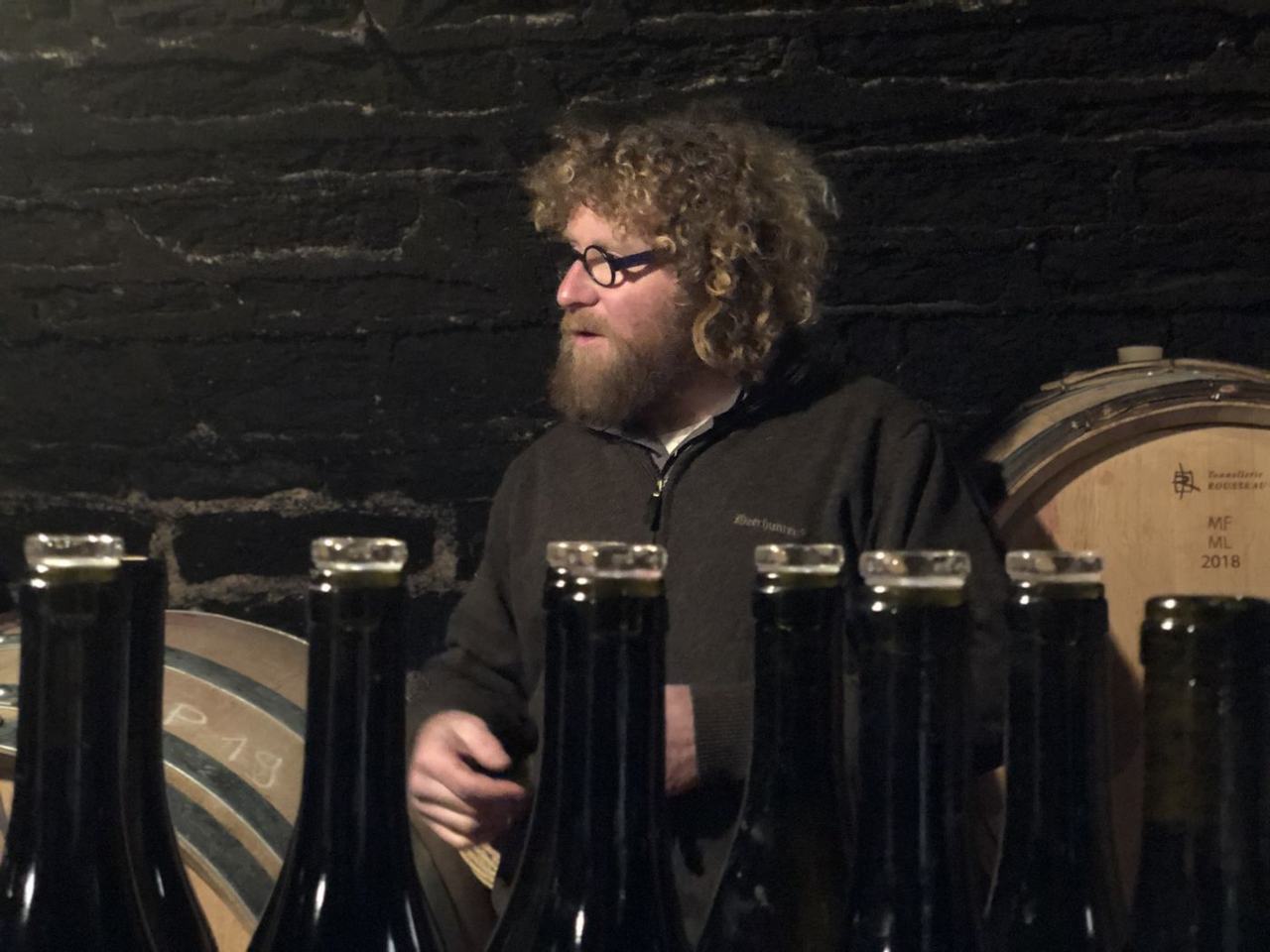
Sylvain Pataille behind a row of bottles in the cellar
Sylvain today, tasting from bottle
06 · Marsannay

The village the Côte forgot, and the premier crus it is about to get.

Vines were given at Marsannay in the year 630, by the Chronicle of Bèze; the dukes’ vines reverted to the French crown in 1477, which is when Clos des Ducs became Clos du Roy. By 1831 the whole slope was Gamay for the cabarets of Dijon. Under the 1930s appellation law its vines qualified only for plain Bourgogne, and Joseph Clair, Bruno’s grandfather, invented a rosé in 1919 to sell them. The village appellation, red, white and rosé, arrived only in 1987: the youngest in the Côte de Nuits, and the only village in Burgundy allowed to make all three.

The case for premier crus has been building since 2002 and was formally filed in May 2012, on Françoise Vannier’s geological map and a 2014 soil thesis. Fourteen climats are proposed, about a third of the appellation: Clos du Roy in Chenôve; Les Longeroies, En La Montagne, Es Chezots (to be renamed En Grands Vaux, to keep it out of Échezeaux’s way), La Charme aux Prêtres, Les Boivin, Les Grasses Têtes, Clos du Jeu, Saint-Jacques and Les Favières in Marsannay; Au Champ Salomon, Aux Genelières, Le Clos and Champs Perdrix in Couchey. The INAO named its candidates in 2024; the public consultation on the exact boundaries closed on 16 September 2026, and the local paper’s headline was “a just and deserved recognition — towards a conclusion in 2027.” It is pending, and it is close.

Sylvain is not an official of anything; he is the argument. He bottles the lieux-dits separately to prove they are different (“a Clos du Roy will never be a Longeroies or a Montagne”) and names Le Chapitre, Clos du Roy, Longeroies and Champs Perdrix as the great sites. Le Chapitre, the old vineyard of the Chapter of Autun that Lavalle classed in 1855, was left out of the 1987 appellation by an accident of the commune line and only became village Marsannay with the 2019 vintage; it is not in the dossier, and he thinks it the best terroir in the village. Two heirlooms are his as much as anyone’s: Chardonnay Rose, the pink-berried mutation he noticed in 2002 when a 1949 parcel in Blungeys came in unexpectedly pink, and which he has since propagated and bottled on its own; and Pinot Beurot, Burgundy’s own Pinot Gris, from a tenth of a hectare in En Blungey planted in 1929.

Something’s happening in Marsannay.

Sylvain Pataille, SevenFifty Daily
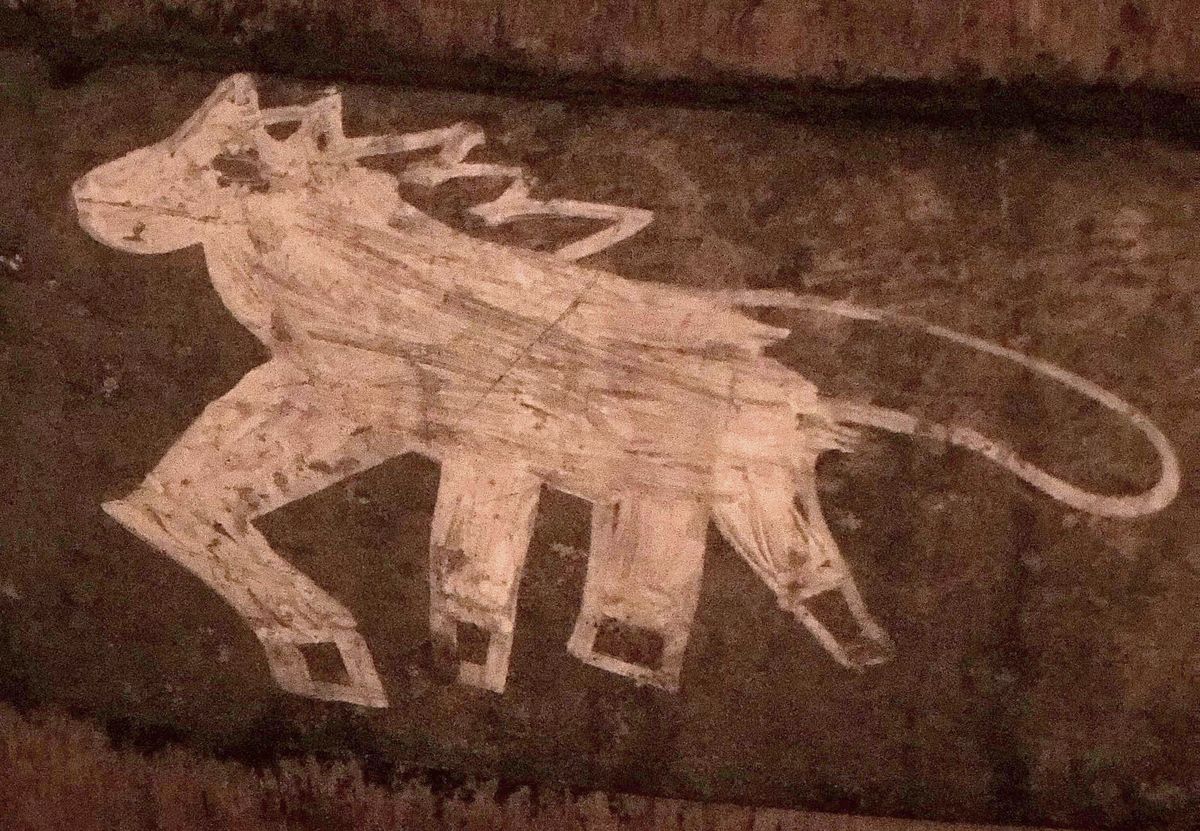
A beast drawn in chalk on the head of a barrel
Chalk on the barrel head
07 · Vineyard & cellar

Organic in 2007, a horse on five hectares, sulphur only when needed.

The conversion to organics in 2007 was, he says, the turning point, undertaken with a nervous eye on the bank. Ecocert certified the domaine in 2008; biodynamic preparations came in the same year and were applied across the whole estate from 2015 after years of trials. Four to five hectares are ploughed by a horse he taught himself to drive. He adopted Guyot-Poussard pruning in 2008 after studying sap flow, keeps yields between twenty and forty-five hectolitres, and experiments with not hedging at all.

In the cellar: the vertical press, whole clusters by cuvée and year, cement and old wood, nought to thirty per cent new oak, and roughly thirty milligrams of total sulphur in the whites and twenty-five in the reds. The rosé, Fleur de Pinot, is Pinot Noir and Pinot Beurot from the oldest parcels, part direct-pressed and part macerated a few days, then eighteen to twenty-four months in foudre and demi-muid; he dropped the conventional Marsannay rosé in 2011 as “too technical.”

Holding
About 15 hectares in Marsannay; more than twelve cuvées, among them a Bouzeron from bought organic grapes
Vines
Aligoté Doré from massale selections; parcels planted 1929 and 1938; Pinot Beurot and Chardonnay Rose
Vineyard
Biodynamic; ploughed in part by animal traction
Vinification
Ambient yeasts; nought to thirty per cent new oak; minimal sulphur
Farming
Certified organic (Ecocert) since 2008; biodynamic
Since
1999, from one hectare of family vines
08 · What they say

Michelin, and the critics.

In July 2026 the MICHELIN Guide published its first Burgundy selection (ninety-four estates in all) and named Domaine Sylvain Pataille among them, noting the hectare he began with and the fifteen he farms biodynamically. William Kelley of The Wine Advocate: “brilliant wines that number among the Côte d’Or’s finest values.” Jancis Robinson: “one of those rare red burgundy bargains,” from “the curly-haired, engaging Sylvain Pataille himself.” Charles Curtis MW in Decanter: “some of the most delectable wines in the northern Côte de Nuits,” and “a champion of Aligoté.” The Guide Hachette calls the domaine “une des valeurs sûres de Marsannay.” Since about 2015 the wines have been on allocation.

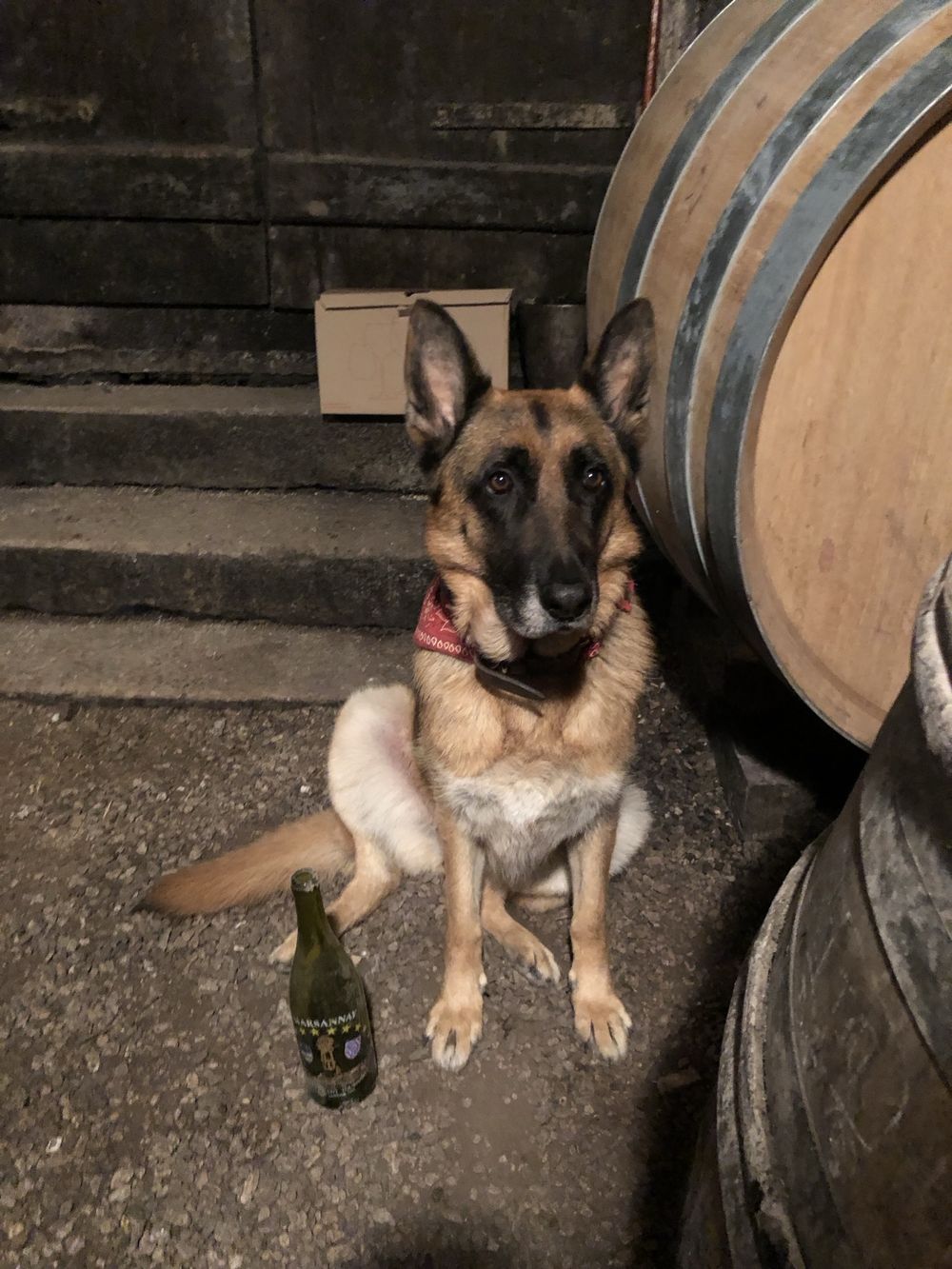
Scooby-Doo, Sylvain Pataille’s dog, sitting in the cellar beside a bottle of Marsannay
Scooby-Doo, keeper of the cellar · with a bottle of Marsannay

← All producers