
A cutting-horse ranch in Coombsville, and a winemaker who would not let the grapes be sold.
Rapp Ranch was famous for horses before it grew wine. In the 1980s it was one of the best-known quarter-horse breeding and training ranches in the country, tucked into the hills of Coombsville east of the city of Napa. Today it is the home of Alice and David Alkosser’s winery, Shadybrook Estate, and its name is on the label of the wines they make from all of their vineyards, Rapp Ranch. Horses still work the place; you can ride through the Cabernet before you taste it.
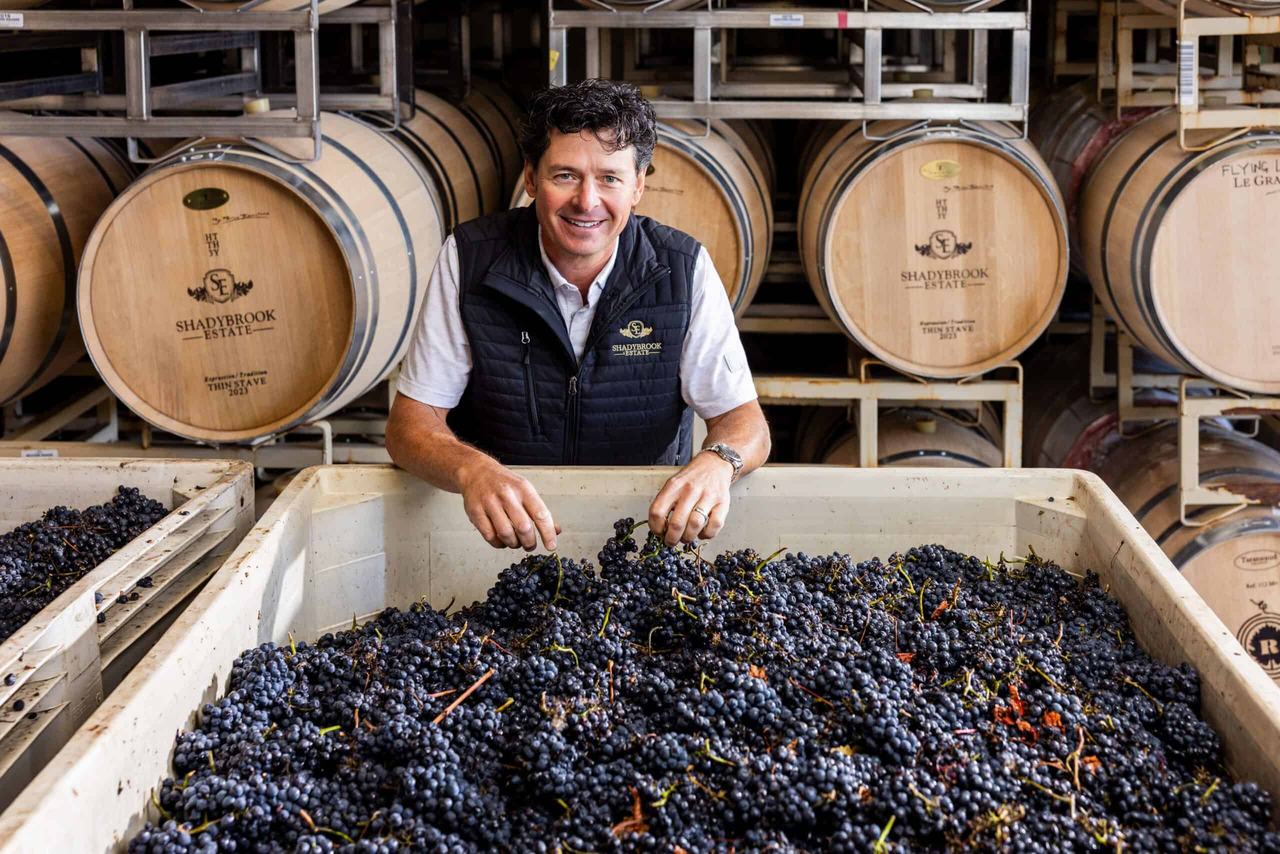
The wine side began almost by accident. The Alkossers bought their first Coombsville vineyard in 2009 meaning to sell the fruit. They asked Rudy Zuidema, a winemaker with some three decades in the valley, to vinify a few small lots so they could judge it, and he came back with an instruction: keep the grapes. He has made every wine since the first vintage, 2010.
Our Rapp Ranch wines come from the two coolest corners of Napa. Los Carneros is where the bay pushes the fog furthest inland, and Chardonnay and Pinot Noir grown there keep a natural acidity the warmer valley has to work for. Coombsville, the estate’s own appellation, is the cool southeastern edge of the valley on volcanic soils, with one of Napa’s longest growing seasons. Zuidema makes both with directness, and gives them time in barrel, longer for the Chardonnay than the Pinot, so they come to us with some age already on them.
02 · Alice and David AlkosserThey went looking for a two-bedroom house.
Alice Alkosser studied food chemistry at UC Davis, took viticulture and enology classes along the way, and worked in research and development for food companies including Hunt-Wesson and Gerber. David trained as an engineer at Cal Poly Pomona. They married in 1980 and built a real-estate business that grew to span several states. Napa was where they went to rest. “In 2005 our intent was to simply purchase a small home with maybe two bedrooms and two bathrooms overlooking someone else’s vineyards,” Alice told The Napa Wine Project.
A realtor took them down a long drive off Shadybrook Lane to an estate with vineyards. David was annoyed and said so, until the other agent mentioned it was a foreclosure. As entrepreneurs, they saw the value. The property came with seven and a half acres of southwest-facing rolling hills; they added two adjoining parcels, about twenty-five acres in all, twelve of them Cabernet Sauvignon and the rest the other Bordeaux grapes. In 2013 they bought a large ranch in Pope Valley at the foot of Howell Mountain; in 2016 Rapp Ranch; and more recently a vineyard in Carneros planted only to Chardonnay and Pinot Noir.
03 · Rapp RanchQuarter horses, a famous mare, and a winery behind the barn.
Jerry Rapp, who with his brother had run California’s first Holiday Inn near San Francisco airport, bought twenty-four acres in Coombsville in 1978 from the Simpkins family, old Coombsville people. His son Phil was the reason: he had been riding cutting horses since he was six and meant to be the best in the country. The Rapps bred and trained quarter horses through the early 1980s, ran production sales that drew buyers from across the country (William Shatner, who also raised cutting horses, among them), and held a dispersal sale in 1985. The mare Jerry bought in 1984 against Phil’s advice, Tapeppyoka Peppy, became one of the foundations of the ranch’s breeding.
Later the property became a winery. When the Alkossers bought it on 1 February 2016 it came with a working winery, twelve acres of vines, stables and an Olympic-size indoor arena. When the neighbouring northern part of the old ranch came up for sale they bought that too, reuniting the original eighty-three acres and adding more than thirty-five acres of Bordeaux varieties, a second winery and a 16,000-square-foot cave. The arena is now a dressage barn, and Napa Valley Trail Rides takes visitors out through the vines on horseback, which the winery says nobody else in the valley offers.
04 · Rudy ZuidemaEvery vintage since 2010, from every one of the family’s vineyards.
Zuidema trained at UC Davis and has worked in Napa for about thirty years; Napa Wine Project lists his mentors as James Hall, Robert Craig, Julie Johnson and Françoise Peschon. Alice Alkosser had met him through a charity auction lot. In 2010, needing someone to make sense of the fruit, she asked him to look. He tasted the Malbec and told her it had to be made into wine. They agreed to make a barrel from each block to learn the vineyard. Other wineries were already asking to buy the grapes. Then Zuidema called to say they could not sell them any more.
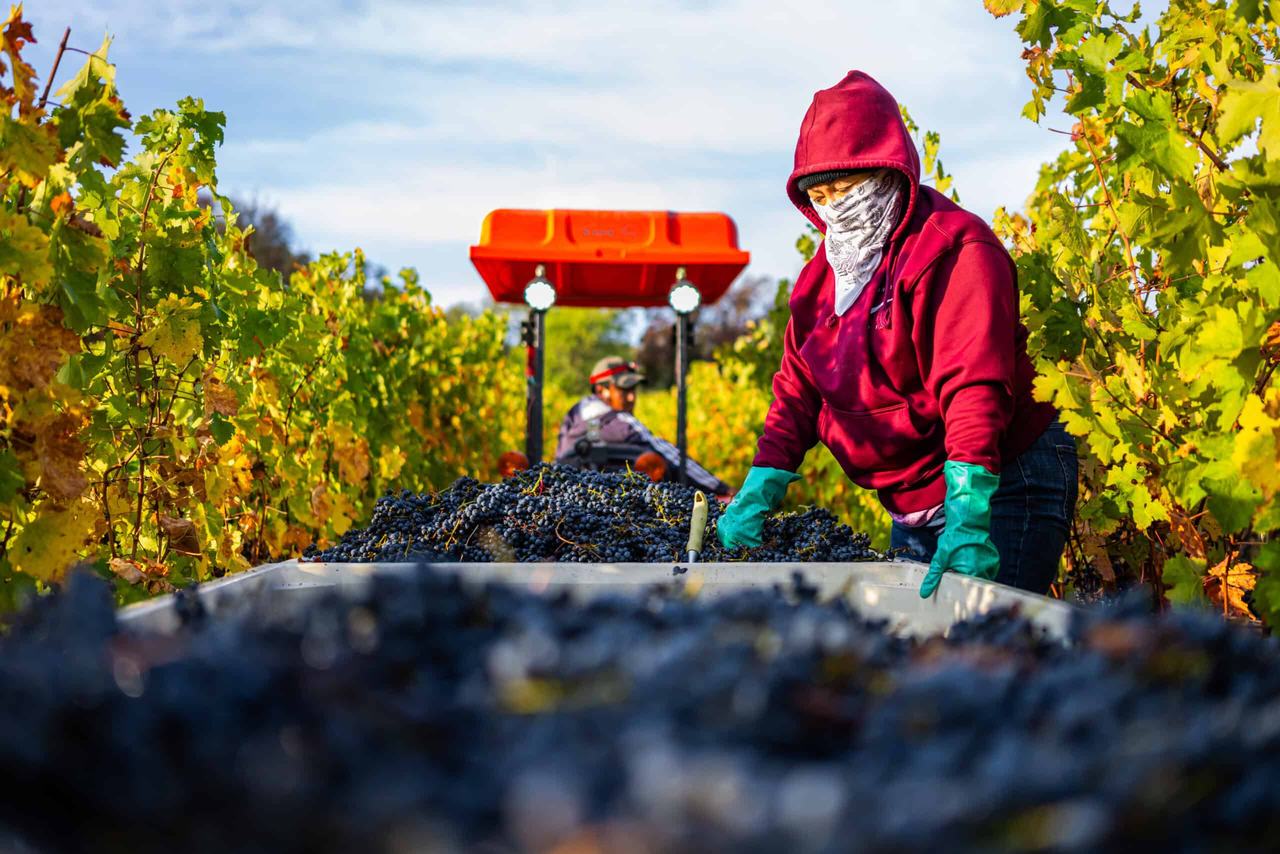
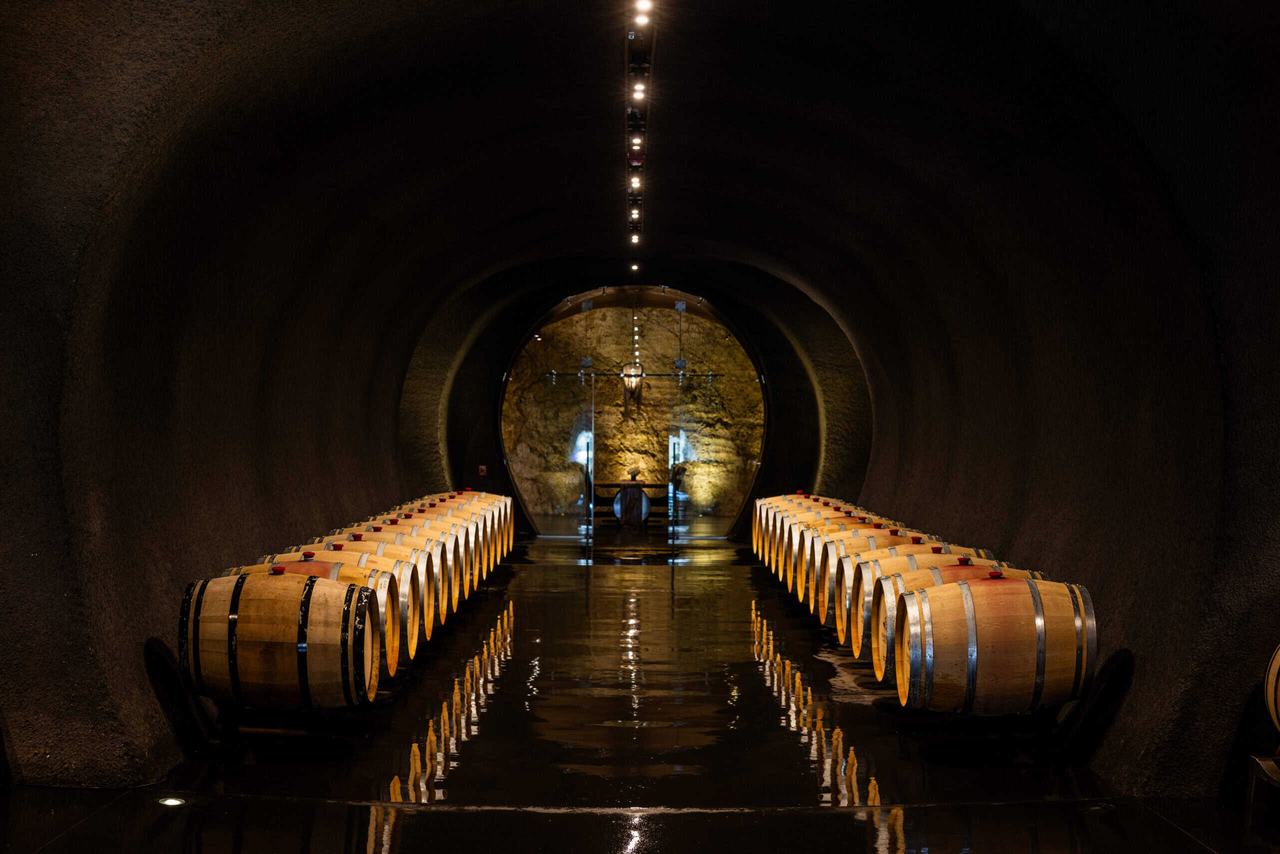
He has made every wine since, from all of the family’s properties. In the vineyard, with the viticulturist Tom Prentice, he follows organic and biodynamic practices; in the cellar he works in small lots, with a gentle sorting table, open and closed-top Italian fermenters, a basket press, and a temperature-controlled cellar for long ageing in French oak. The winery describes the small lots as a spice rack: many separate batches to choose from when it is time to blend.
You have no choice, you need to make wine.
Rudy Zuidema to Alice Alkosser, as she told The Napa Wine Project
05 · Carneros and CoombsvilleTwo cool corners of Napa, and wines released with age on them.
Coombsville became Napa’s sixteenth AVA in 2011. It lies in the southeastern corner of the valley, on the western foothills of the Vaca range, in a bowl of volcanic soils open to the cool air off San Pablo Bay. The season is long, and the Cabernet comes out with structure and a silky, Bordeaux-like texture. Cutter’s Reserve is the estate’s Coombsville red: 58% Cabernet Sauvignon, 28% Petit Verdot, 10% Cabernet Franc, 4% Merlot, twenty-nine months in French oak, 306 cases.
The Carneros wines came before the family owned land there. The Chardonnay is made without malolactic fermentation, to keep its acidity, then aged for twenty-six months in French oak with lees stirring, 446 cases. The 2017 Pinot Noir spent eighteen months in twice-used and neutral French oak, 270 cases; Zuidema calls it “a beautiful expression of the Carneros appellation.” Both are citrus-clear and light on their feet in the way Carneros wines are when nobody pushes them, and both have now had several years in bottle. They are wines from a specific, underrated place, made by someone who has learned to trust it.
In the vineyard
& cellar.
- Estate
- Shadybrook Estate, 100 Rapp Lane, Coombsville · Rapp Ranch label drawn from all the family’s vineyards
- Since
- First vineyard 2009 · first vintage 2010 · Rapp Ranch bought 2016 · Alice and David Alkosser
- Winemaker
- Rudy Zuidema, every vintage since 2010 · viticulturist Tom Prentice
- Vineyards
- Coombsville (Shadybrook, Rapp Ranch) · Pope Valley · Los Carneros
- Soils
- Volcanic soils in Coombsville
- Cellar
- Small-lot fermentation in Italian open and closed-top tanks · basket press · long ageing in French oak (26–29 months for these wines)