
Two and three-quarter acres of Howell Mountain, one wine, and a pitcher who learned to wait.
Howell Mountain Cabernet is a different conversation from valley-floor Cabernet, and most buyers don’t know this until they taste them side by side. Selah is a clean way to have that conversation. It is one tiny vineyard, about two and three-quarter acres at around 1,700 feet among the pines, two clones of Cabernet Sauvignon on red volcanic soil, made into one wine a year by Thomas Rivers Brown. Production is a few hundred cases.
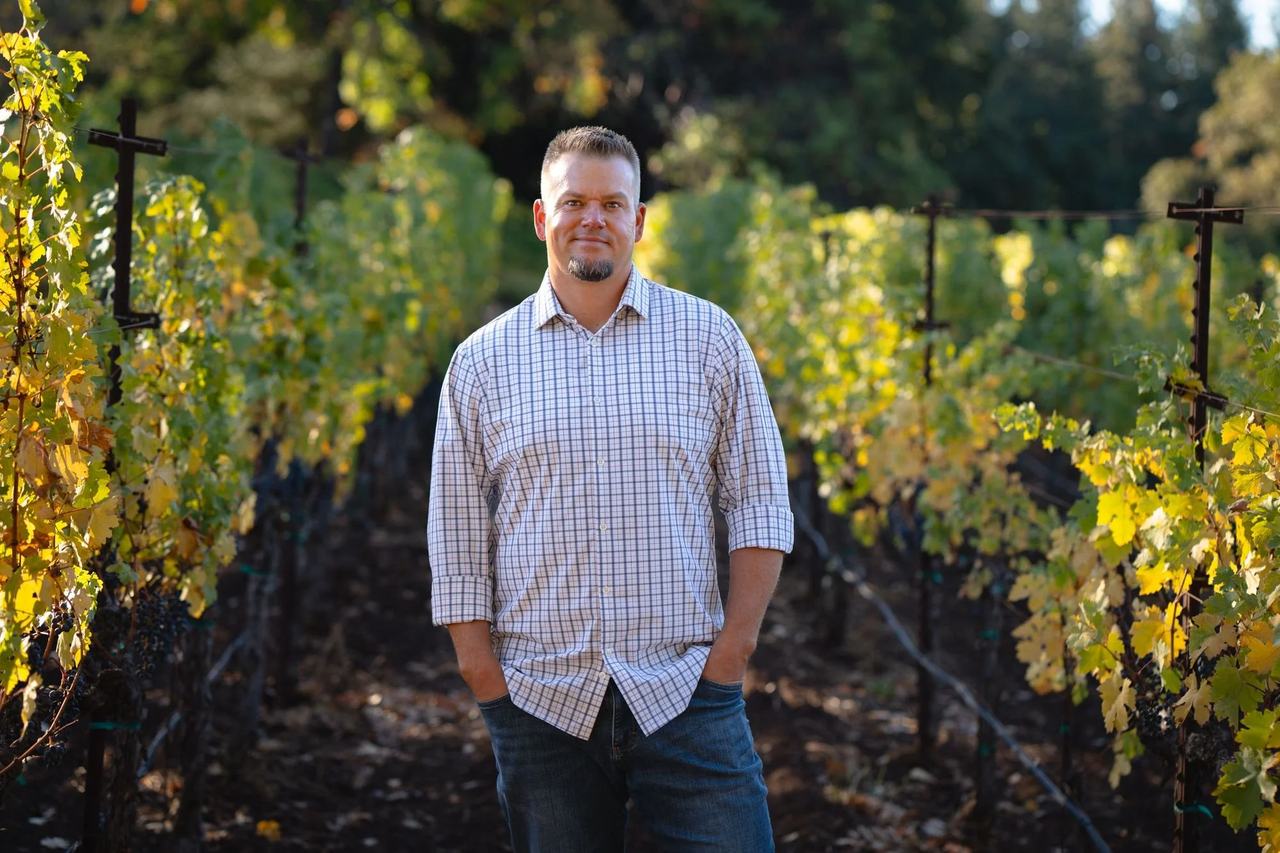
The owner is Joe Blanton, who pitched thirteen seasons in the major leagues and won the 2008 World Series with the Phillies. He and his wife LeeAndra bought the vineyard in 2014, while he was still playing. He hired the winemaker after tasting blind, and the vineyard manager on the winemaker’s word. It is a sensible way to spend a ballplayer’s money, and it shows in the glass.
Brown makes Selah without cosmetic concessions: no softening for early approval. The mountain gives grip and a mineral angularity that need time, though not a decade of it. Let the wine breathe and the tannins settle. It is still interesting at eight years and still developing at twelve, which is a different kind of luxury from most of what Napa sells.
02 · Joe BlantonThe pause button between seasons.
Blanton was born in Kentucky and came up with the Oakland A’s in 2005. On the road, the older players took the young pitcher to dinner and ordered the wine, and the trips up to Napa on off days did the rest. A bottle of 2002 Joseph Phelps Insignia was the moment he realised there was more to wine than he had thought. After he was traded to Philadelphia in 2008 he kept reading wine books on the road between games. That October he hit a home run in Game 4 of the World Series, and five days later he was on the parade float.
Every November, he and LeeAndra went to Napa without their phones to recover from the season. “We used to call it our pause button from the season,” he told The Philadelphia Inquirer. They named the wine for it: selah, the Hebrew word in the Psalms that marks a pause. He took college courses in fermentation and pruning, bought the vineyard in 2014, and retired at thirty-six. He leaves the pruning to the professionals but is there for the harvest at five in the morning, with the children given their own rows.
The plan was to live on the vineyard. Then the Blantons counted the school runs: three trips a day up and down a winding mountain road. They live on the valley floor instead, fifteen minutes below, and Joe drives up often. He makes a point of being there when the wine goes into barrel and when it goes into bottle, and tastes from barrel with the team once or twice a year.
Selah. It means to pause and reflect. We were trying to name the wine and it came down to ‘What does Napa mean to me?’
Joe Blanton, The Philadelphia Inquirer, 2023
03 · The vineyardAbove the fog, next to Steinhauer Ranch, with the land trust on one side.
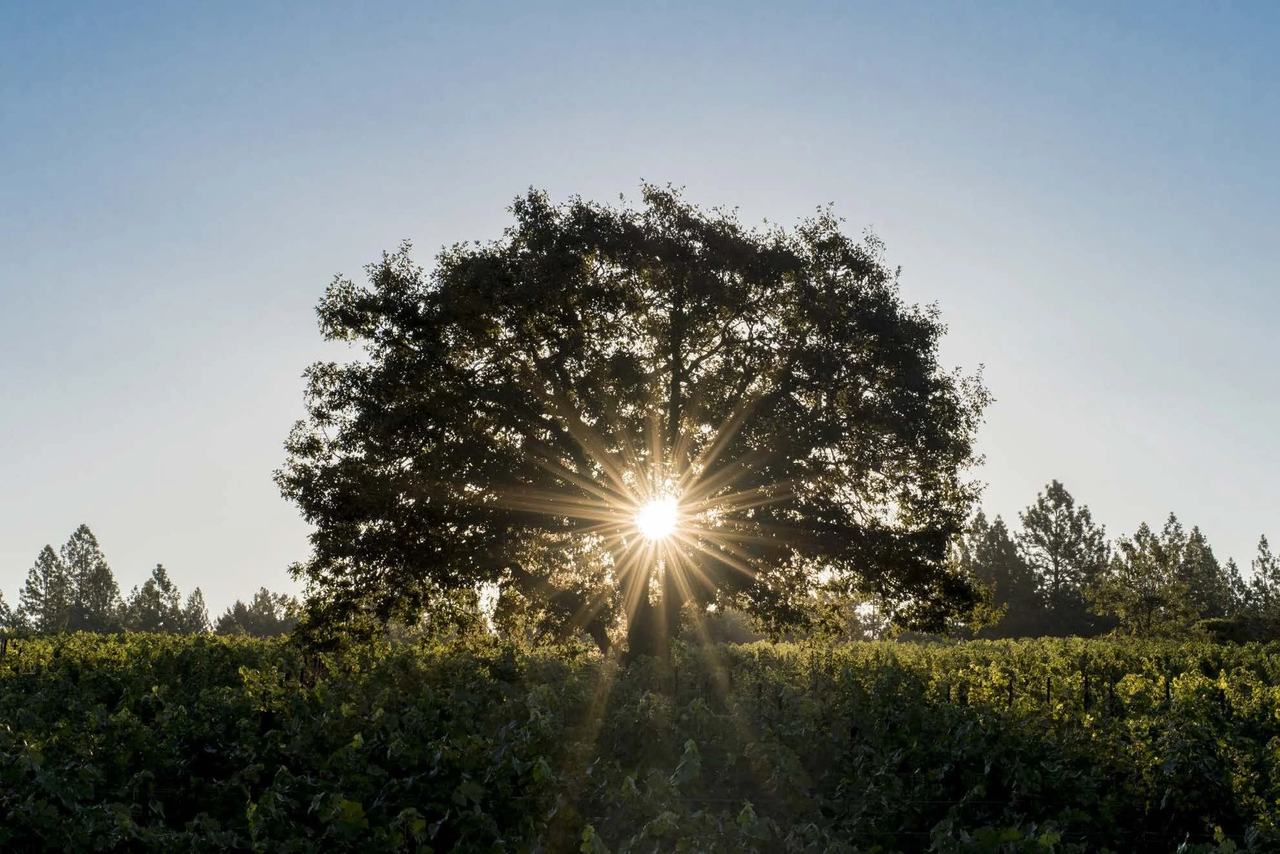
The site is a seven-acre property about five minutes’ drive from Outpost on Howell Mountain, with roughly 2.75 acres of vines between 1,400 and 1,700 feet. It is planted entirely to two Cabernet clones, 7 and 337, in an upper and a lower block, on volcanic ash and red clay. Tall pines and forest surround it. One side borders Beringer’s Steinhauer Ranch, one of the best-known vineyards on the mountain; another borders land held by the Napa Land Trust, so it will always be wild.
The vines were planted around 2000 by two doctors, Andrew Zolopa and Annie Talbot, who made a single wine from it under the name Blue Hall, after Robert Louis Stevenson’s phrase for the sky over Mount St. Helena. Like most of Howell Mountain, the vineyard sits above the valley’s fog line, and the altitude makes for cooler days than on the valley floor. The mountain’s volcanic soils are where the grip comes from. Blue Hall’s first commercial release was the 2005, so the vines had already proved themselves when the Blantons arrived.
04 · Thomas Rivers BrownThe busiest Cabernet hand in Napa, chosen blind.
When the Blantons were ready to make their first wine in 2014 they tasted blind through wines from a number of Napa winemakers and kept coming back to one style. It belonged to Thomas Rivers Brown, a South Carolinian who came to the valley in 1996, learned under Ehren Jordan at Turley, and within ten years had two hundred-point scores from Robert Parker. He now makes Schrader, Outpost and his own Rivers-Marie among many others. Brown brought in Josh Clark, one of the most trusted vineyard managers in the valley, to farm the site.
Each clone is picked, fermented and aged separately before the final blend. The Cabernet spends eighteen months in French oak, 80 percent new, and is made in the dark-fruited, structured mountain style: blue and black fruit, cocoa, fine-grained grippy tannins. Jeb Dunnuck gave the 2017 95 points. There is now a Chardonnay as well, from Goldridge sand in the Russian River Valley, fourteen months in French oak, a fifth of it new, and first made in 2023. Food-friendly, the Napa Wine Project called it, unlike Chardonnays that are a meal in themselves.
05 · One site, one CabernetThe same team, the same rows, and the patience to let it age.
There are plenty of celebrity labels in Napa. Most buy fruit. Selah owns its vineyard, makes one Cabernet from it (and, since 2023, a Russian River Chardonnay), and has kept the same winemaker and vineyard manager since the start. That consistency is rare, and it means you can taste the vintages against each other and learn the site.
We have the 2017 and the 2018. The Napa Wine Project found the 2018 darker-fruited and in a sweet spot, its tannins rounded and dusty. Both show what mountain Cabernet does that valley Cabernet doesn’t: the tannins stay firm and fine, and the wine gets more complex rather than just softer. Decant it, give it an hour, and serve it with something off the grill.
In the vineyard
& cellar.
- Vineyard
- ~2.75 acres on a 7-acre estate · Howell Mountain, ~1,400–1,700 ft · borders Steinhauer Ranch
- Since
- Bought by Joe and LeeAndra Blanton in 2014 · first vintage 2014 · vines planted c. 2000
- Soil
- Volcanic ash and red clay, above the fog line
- Vines
- Cabernet Sauvignon, clones 7 and 337, upper and lower blocks
- Team
- Thomas Rivers Brown, winemaker · Josh Clark, vineyard manager
- Cellar
- Clones fermented and aged apart · 18 months in French oak, 80% new · ~250–300 cases
- Honours
- 95 points Jeb Dunnuck, Cabernet Sauvignon 2017